
By: Rabbi Tsvi Heber
Director of Community Kosher
Warnings and Disclaimers
Warning: This article presents a speculative futuristic scenario that may never occur, at least not within your lifetime.
Disclaimer: This article was written by Copilot with the assistance of the author. Some of the words used in the article are not exactly the words of the author just what AI “thinks” might be words that the author would use based on his previously published works in Kosher CORner publications and elsewhere on the internet. Information included herein should not be relied upon since Copilot’s “brain” consists largely of hallucination and inaccuracy. But since the content is stimulating and food for thought, we feel it is worthy of being presented to the public even if it is inaccurate since that is largely consistent with the AI’s general approach to life.
Bishul Optimus
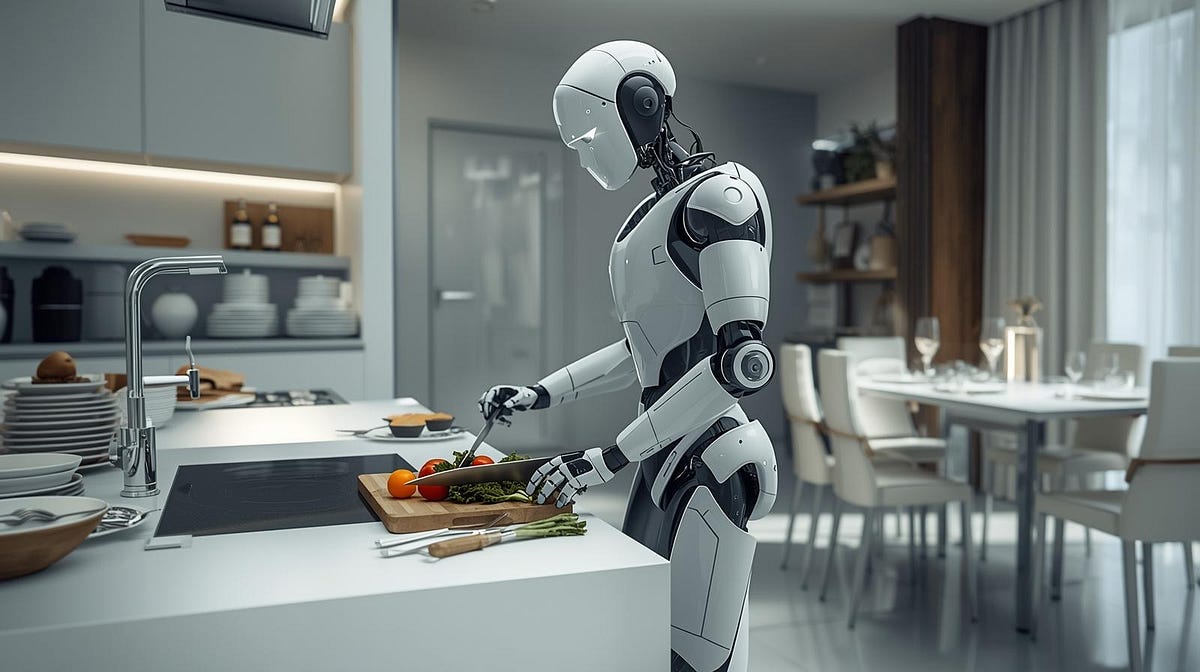
In recent months, public attention has turned toward Optimus, the humanoid robot developed by Elon Musk and engineered to perform increasingly complex household tasks. Among the more stunning demonstrations was Optimus preparing simple food items like stirring a pot, pressing microwave controls, and manipulating kitchen tools with surprising dexterity. As technology advances, kosher consumers should be asking whether robot assistance in cooking is condoned by halacha. This would be incredibly helpful especially for people who can no longer cook for themselves. Would food cooked by Optimus fulfill the requirements of bishul yisroel?
The rabbinic prohibition¹ of bishul akum applies when certain foods² are cooked exclusively by a gentile, even if (or perhaps especially if) he acted as an agent of the Jew to cook.³ The decree was instituted to prevent inappropriate social interaction that could lead to intermarriage.⁴ Is an Optimus robot a gentile or a Jew? Should we view his actions as independent human actions or as the extension of the person who issued the instruction? Can a prohibition to prevent inappropriate social interaction apply to a robot which has no halachic identity, no religious status, and no capacity for the independent social interaction that Chaza”l sought to regulate. No matter how distorted the societal perspective becomes toward the role of the robot; can this prohibition apply to anything but a human being?
The answer depends on whether this halacha is framed as an absolute requirement for Jewish intervention, or whether it is framed as the requirement to avoid non-Jewish cooking. Answering this question provides insight as to whether food cooked exclusively by Optimus is kosher. The Gemara⁵ discusses a case where a gentile ignited a fire in a swamp with the intention of cooking grasshoppers. In the context of the discussion, the Gemara relates that if the gentile had not intended to cook the grasshoppers rather to burn the overgrown reeds, the inadvertently cooked grasshoppers would still be kosher even though they were cooked by a gentile. This is because the prohibition of bishul akum requires the gentile’s intent to cook. Another example brought in the Gemara is when a gentile burnt off the hair of a shechted cow and inadvertently cooked the meat of its ear. This meat remains kosher because it was cooked inadvertently. The Tur⁶ brings a third example of a gentile who fired up a kiln to dry pots, and unbeknownst to him the kiln had a pumpkin inside which he inadvertently cooked. In these scenarios, the absence of kavanas bishul – mindful intent to cook by the gentile – allows the food to retain its kashrus.⁷ Clearly, bishul yisroel is not an absolute requirement for Jewish intervention; rather it describes food whose cooking process avoids non-Jewish cooking. Bishul Optimus, therefore, is permitted.
Now let us proceed to the next step and ask whether Optimus can replace Jewish intervention? For example, can a mashgiach utilize his Optimus robot to turn on the oven for a non-Jewish chef who is cooking in a kosher restaurant. Rabbi Chaim Yisroel Belsky zt”l in Shulchan HaLevi⁸ writes about a similar scenario. The question was whether a kashrus agency can set up a system whereby the ignition in the oven is automated and can only be lit from a distance by the mashgiach through a phone call or app. Rabbi Belsky writes that this is indeed considered to be bishul yisroel for several reasons. First, the Gemara⁹ indicates that the fire on the mizbeach could have theoretically been lit by a Kohen with a fan even though it is ignited from a distance. Second, the Yad Ramah explains that the immediate reaction caused by your action is never classified as a grama – an indirect causation – rather it is classified a direct action.¹⁰ Finally, we know that someone who lights a fire is responsible for the damage that it causes. Although the fire made its own way toward the property it damaged, it is the responsibility of the igniter since he initiated it. He is compared to someone who shoots an arrow which eventually makes its own way toward a target through the force expended by the shooter – “meshum chitzo“.¹¹ As a result, the fire belongs to the igniter even though he is located at a distance. A fire ignited from a distance, by telephone or app, certainly belongs to the igniter. However, shouldn’t instructions to Optimus be classified as a grama?
Indeed, Rabbi Belsky’s reasoning may be superfluous. Rabbi Shlomo Miller shlit”a once related that even if the fire was lit by a Jewish person through a grama it would still be considered his fire and the food would be permitted. Rabbi Miller brought proof from the Gemara about a gentile who ignites a fire to burn the overgrowth of reeds and inadvertently cooks the grasshoppers. The Gemara concludes that this does not render the food bishul akum since the gentile did not have intention to cook. The implication is that a gentile who does have intention to cook the grasshoppers indeed creates bishul akum. Is the act of igniting a fire in the swamp a grama? Rabbi Miller cites the opinion of Reish Lakish who holds that responsibility for damage caused by fire at a distance is because the fire is his property and he has responsibility for his property – “meshum mamono“. Accordingly, the act of setting the swamp on fire is only a grama, even if it is done with intent to cook. Yet, we do not find anyone who writes that setting a swamp on fire with intent to cook is not bishul akum according to Reish Lakish. Therefore, we must assume that even according to this opinion, the grama results in bishul akum. If we extend that principle to its logical conclusion, then the type of cooking that when performed by a gentile, results in bishul akum, if performed by a Jew creates bishul yisroel. Therefore, if a Jew ignites a fire through a grama his action is sufficient to create bishul yisroel.¹²
According to the opinion of Rabbi Miller shlit”a, a fire lit by an Optimus robot which is instructed by a Jew is the equivalent of a fire lit by grama and the food cooked on that fire is permitted.
“Is it permitted to ask Optimus to perform melachos on Shabbos on behalf of a Jew?… …To execute a process that instructs Optimus to turn on or turn off a light, Optimus would likely need to compute hundreds or thousands of melachos.”
Amira l’Optimus
Is it permitted to ask Optimus to perform melachos on Shabbos on behalf of a Jew? Almost half a century ago, Rabbi Moshe Feinstein zt”l penned a teshuva prohibiting the use of a timeclock that is set prior to Shabbos to enable an electric implement to cook on Shabbos. Reb Moshe, in a prophetic statement, reasoned that if we were to allow it, we would eventually end up with fully automated factories working by themselves on Shabbos! He felt that if such innovation was around at the times of the Tanaaim and the Amoraim they would have prohibited it the same way they prohibited amira la’akum – melacha performed by a gentile for a Jew on Shabbos. He further reasoned that the decree against amira la’akum may already include timeclocks since that prohibition should include any type of melacha initiated by a Jew even if performed by a machine. Finally, he reasoned that allowing melachos performed by a timeclock would be prohibited under the general rubric of zilusa d’Shabbos – the disregard for the sanctity of Shabbos. Accordingly, for the same three reasons, Reb Moshe would prohibit amira l’Optimus.
It is interesting that at the end of the teshuva, Reb Moshe allows the use of timeclocks to turn on, and to turn off lights based on several reasons which are outlined in the footnote below.¹³
Nevertheless, it is reasonable to assume that Reb Moshe would not extend this heter to amira l’Optimus. To execute a process that instructs Optimus to turn on or turn off a light, Optimus would likely need to compute hundreds or thousands of melachos. For example, when you tell Optimus to “pick up that cup,” its cameras capture the scene and its neural network identifies the cup, locates it, and plans the required full-body movement. As it reaches, sensors continuously provide feedback so the robot can maintain balance, correct its path, and adjust its grip. Graphics Processing Units (GPUs) process visual data, update the motion plan, and issue motor commands many times per second, producing hundreds of micro-adjustments and thousands of parallel computations even for a simple action.
It is this type of zilusa d’Shabbos caused by an unbridled Optimus that was articulated in Reb Moshe’s prophetic teshuva half a century ago. Even those who disagreed with Reb Moshe at the time regarding timeclocks and permitted them, which is the common custom today¹⁴, cannot deny that utilizing Optimus is much more complex than a timeclock. Furthermore, although we do not make up our own gezayros, it is important to be practical. It is obvious to me that someone who sets up his Optimus to perform melachos on Shabbos will ultimately stumble and unwittingly instruct it to perform a task on his behalf on Shabbos. In doing so, he will transgress hundreds or even thousands of sequential melachos many of which are melachos d’oraysos as a result.¹⁵ This cannot be allowed to happen. ∎
- בספר קב וישר (פרק ע”ה) כ’ שאיסור בישולי עכו”ם מדאורייתא ועי’ בספר שדה חמד (כללים מערכת ב’ אות ס”ט) שדבר פשוט דמדרבנן הוא.
- שו”ע יו”ד (סימן קי”ג סעיף א’) דבר שאינו נאכל כמו שהוא חי וגם עולה על שולחן מלכים ללפת בו את הפת או לפרפרת שבשלן גוי וכו’ אסרו משום בישולי גויים עכ”ל.
- שם (סעיף ו’) כל שבישלו ישראל מעט בישולו בין בתחילה בין בסוף מותר לפיכך אם הניח גוי בשר או קדרה על גבי האש והפך ישראל בבשר והגיס בקדרה או שהניח ישראל וגמר הגוי הרי זה מותר ע”ש ברמ”א ועוד.
- עי’ רשב”ם הובא בהגהות אשר”י דבשולי עובד כוכבים נאסר משום גזירה שמא יאכילנו דבר טמא. וכ”מ מהרמב”ם (פיה”מ) שפירש שלשון חתנות ענינו חיבור ולאו דוקא נישואין וז”ל נאסרו כדי שנתרחק מהם ולא נתערב עמהם כדי שלא נמשך בהתערבנו עמהם להתפקרות במה שאסור והוא ענין אומרם משום חתנות.
- ע”ז (ל”ח.)
- טור (שם סעיף ה’)
- שו”ע (שם)
- שו”ת שלחן הלוי יו”ד (סימן כ”ו)
- יומא (מ”ה.)
- סנהדרין (ע”ז:) ד”ה אמר רב פפא
- ב”ק (כ”ב:)
- הובא בכתבי ידיד נפשי הרב יחיאל טייכמן שליט”א הנקרא “מורי ורבותי” בשם הגרש”מ שליט”א בתאריך 6.29.2022
- שו”ת אגרות משה או”ח ח”ד (סימן ס’) וז”ל בסוף התשובה אבל עכ”פ מה שכבר נהגו להעמיד ע”י מורה שעות לכבות הנרות דעלעקטרי שהודלקו, וגם שיחזרו להדליק אח”כ בסוף היום אין לאסור מאחר דלכבוי הנרות של המדורות הגדולות שנקראו בלע”ז לאמפן שהיו דאש ממש נהגו בכל המקומות לכבותם ע”י עכו”ם, והיו גם מקומות שהיו נוהגין לחזור ולהדליקם בביהמ”ד לתפלת נעילה ביו”כ. ונמשך מזה באיזה מקומות שגם בשבת לעת ערב הדליקו ע”י נכרי לאמירת המזמורים, אף שכבר צווחו הרבה. עי’ נוב”ק חאו”ח (סימן ל”ג) אבל נתן טעם להמתירין, והרמ”א (סימן רע”ו סעי’ ב’) שנהגו רבים להקל לצוות לעכו”ם להדליק לצורך סעודה, ובפרט בסעודת חתונה או מילה ומשמע שבמקום צורך גדול מתיר. שלכן אף שמן הראוי להחמיר, ובגבולנו ביורא”פ החמירו מ”מ כיון שיש רבוותא שהתירו ונהגו כן בהרבה מקומות אין לאסור מה שכבר נהגו להקל בהעמדת העלעקטרי בע”ש ע”י מורה שעות שיכבה וגם שידליק בשבת להזמן שהעמידו. וגם ממילא ליכא זילותא לשבת בזה וליכא טעם האחרון לאסור כיון שהיו מקומות שנהגו בזה אדרבה למצות כבוד סעודת שבת ונשאר רק טעם הראשון שיש ג”כ לסמוך להתיר אבל הבו דלא לוסיף עלה להתיר גם לבשול ומלאכות אחרות ויש לאסור עכ”ל.
- עי’ שמירת שבת כהלכתה (פרק י”ג הלכה כ”ו)
- הרי לא התיר בתשובת הגרמ”פ זצ”ל אלא משום שכבר נהגו להדליק ע”י עכו”ם במקום צורך גדול וכדאי’ ברמ”א (שם), ובכן עדיף להשתמש בשעון שבת מלהדליק ע”י עכו”ם ולית בה משום זילותא והבו דלא לוסיף עלה כדאי’ שם. משא”כ כאן שכלול בו מאות או אלפי מלאכות ביחד שלא התירו כלל לעולם משום אמירה לנכרי. ובעצם הענין איכא זילותא דשבת ופירצא גדולה וכמעט א”א למנוע מלעבור מאות או אלפי מלאכות דאורייתא.
COR, the Kashruth Council of Canada, is one of the world’s largest kosher certification agencies, certifying thousands of products, restaurants, and facilities. Learn more at cor.ca, or read about our certification services at corkosher.com.