
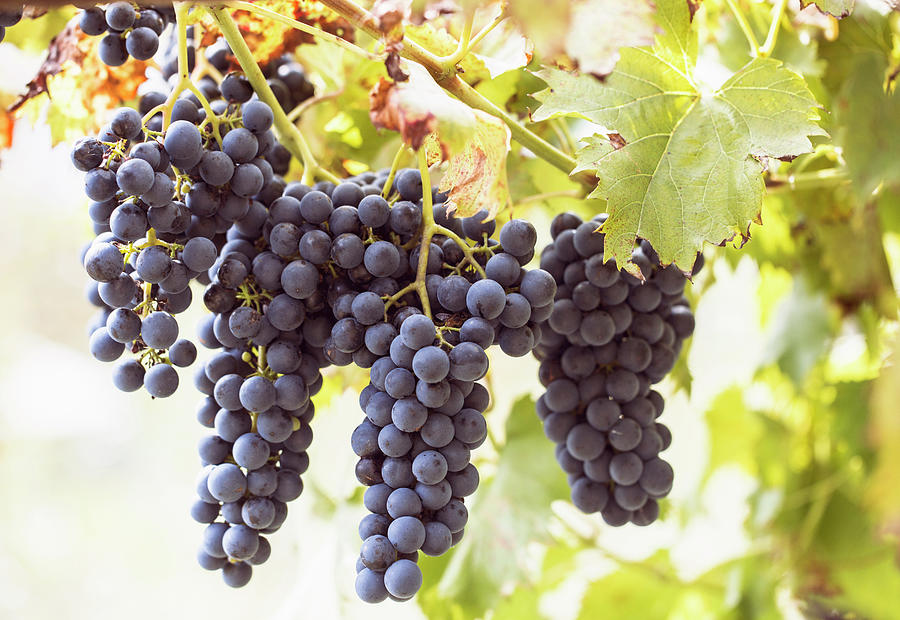
What is the appropriate beracha to recite on unripe grapes?
By: Rabbi Yechiel Teichman,
Rabbinic Administrator and Halachic Advisor
A community member asked the following: He has grapes growing in his yard. If they are left to fully ripen, squirrels and raccoons eat them. He therefore harvests them early, shortly after they change colour, and uses them to make wine.
This raises two questions: (1) Does one recite Borei Pri Ha’eitz when eating these grapes, or are they considered boser (unripe grapes) whose beracha is Borei Pri Ha’adamah? (2) What status does the wine produced from such grapes have? Is its beracha Borei Pri Hagafen, and is it suitable for Kiddush? This question may also be relevant to light (low-calorie) grape juice (see below for the OU’s statement regarding Kedem Lite Grape Juice*).
Shulchan Aruch¹ states that grapes must reach the size of pul halavan (a white bean) before one may recite Ha’eitz. Since we are not proficient in identifying which bean this refers to, one must be machmir and refrain from reciting Ha’eitz until the grape is very large. Similarly, Sha’arei Teshuva² writes that one should not recite Hagafen over wine made from unripe grapes (boser).
What level of maturity must a grape reach for one to recite Ha’eitz over the grape and Hagafen over its wine? As mentioned above, the grape must reach the size of a white bean (pul halavan) for one to recite Ha’eitz. The source is the Gemara³, which cites a Mishnah in Shevi’is discussing the prohibition against cutting branches and thereby ruining shemittah fruit before it has had an opportunity to complete its growth. It states that one may not cut a branch of a grapevine once the berries have formed seeds. The Gemara states that this stage is also known as boser and corresponds to the size of pul halavan. Once the grapes have reached the stage at which they are obligated in ma’aser (onas hama’asros), one may cut the branch, as they are no longer considered unfinished fruit. Tosafos⁴ writes that the size of pul halavan is also relevant to the beracha: when the fruit is smaller than pul halavan, the beracha is Ha’adamah; when it reaches the size of pul halavan, the beracha is Ha’eitz.
The threshold for reciting Hagafen on the grapes’ juice, however, is more stringent. According to Sha’arei Teshuva, juice squeezed from grapes that have reached the boser stage still receives the beracha of Shehakol. Only at some point after the grapes have grown beyond the pul halavan stage is the beracha of Hagafen recited. The question is at what point the liquid inside the grape is halachically considered wine.
It seems that the liquid inside the grapes attains the status of wine only once the grape has reached onas hama’asros, identified as the point at which the seed is visible from the outside. The source for this is Tosafos. The Mishnah mentions a stage at which the “water enters the boser“, indicating that at this stage the liquid in the grapes is still categorized as water rather than wine. Tosafos⁵ quotes Rabbeinu Meshulam, who states that because the Mishnah identifies the liquid in boser grapes as water, what is squeezed from boser is not considered wine and may therefore be touched by a non-Jew. Rabbeinu Tam,⁶ however, does not agree that a non-Jew should be permitted to touch it because we are not proficient to determine until what point the liquid is still considered water rather than wine. Rabbeinu Tam adds: If, in a particular year, the grapes did not ripen properly, would we say that the wine produced that year may be touched by non-Jews?
Rav Moshe Feinstein, in Dibros Moshe,⁷ addresses an apparent contradiction in Rabbeinu Tam. On the one hand, Rabbeinu Tam is stringent with allowing a non-Jew to touch the wine, since we are not proficient in determining until what point it is considered water. On the other hand, he argues that wine made from boser in a year when the grapes did not ripen properly is certainly considered wine and subject to the relevant prohibitions. Rav Moshe Feinstein explains that grapes that are capable of producing quality wine cannot be considered boser, halachically, and people who call it such are doing so erroneously.
What emerges is that although Sha’arei Teshuva writes that, regarding the beracha, Rabbeinu Tam would agree that it cannot be considered wine, this applies only when there is a safek. When the grapes, however, are able to produce good wine, it establishes that they are not boser, and the beracha is certainly Hagafen.
Let us now address our original question: May one recite Borei Pri Ha’eitz over grapes that are harvested early? The Mishnah Berurah⁸ writes that if the grapes have the appearance of fully ripened grapes, their size is not an issue. Furthermore, if the pits are visible from the outside, they are close to fully ripening, and the beracha is Borei Pri Ha’eitz according to all opinions.
What about reciting Borei Pri Hagafen over wine made from unripe grapes? As noted above, Rav Moshe Feinstein holds that if one can make good wine from the grapes, there is no doubt that the beracha is Borei Pri Hagafen. Additionally, the Chazon Ish⁹ writes that once the pits of the grapes are visible from the outside (onas hama’asros), at that stage one may make wine from them for Kiddush and recite Borei Pri Hagafen. ■
* Kedem Lite Grape Juice has become indispensable for many who seek to lower their sugar intake while partaking of Kiddush and the Arba Kosos. The secret to producing low-sugar grape juice is to use lower-sugar grapes. Kedem Lite Grape Juice uses early-harvest Concord grapes picked at approximately 11-13 Brix. (Late-harvest Concord grapes can reach 18 Brix.) Some have questioned whether these grapes are boser (unripe grapes).
The beracha over boser is Ha’adamah (not Ha’eitz), and Sha’arei Teshuva writes that the beracha over juice made from boser grapes is Shehakol (not Hagafen). However, the grapes in question are full-sized and purple. They look the same as other ripe Concord grapes but taste less sweet and more tart than regular grapes. The Mishnah Berurah writes that once grapes have the appearance of ripe grapes, they are no longer boser. Furthermore, the Levush writes that boser refers to grapes that cannot be made into wine. This does not apply to these grapes, since they can be made into wine, albeit with a lower alcohol content (approximately 5-6%). To lower the sugar content further, Kedem Lite Grape Juice is also diluted with approximately 33% water. Therefore, the beracha over Lite Grape Juice is Borei Pri Hagafen. It is not recommended to add additional water to Lite Grape Juice.
Divine Design
In the development of fruit, one can clearly see the divine plan in its design. Since Hashem wants the fruit to reproduce, the fruit’s first priority is to produce a viable seed. During the first period of growth, it does just that: it develops a viable seed. At the same time, however, the fruit produces acids and other compounds that discourage animals and people from eating it. By the end of the first period of growth, a viable seed has been produced. During the second period, the grape therefore becomes sweet-tasting and appealing in colour. This makes the fruit appealing to birds, animals, and humans, who consume it and thereby disperse the seeds.
1 שו”ע (או”ח סי’ ר”ב סעי’ ב’), הבוסר, כל זמן שלא הגיע לכפול הלבן, מברך עליו: בפה”א, ומשהוא כפול הלבן ואילך מברך עליו: בורא פרי העץ; ומתוך שלא נודע לנו שיעור פול הלבן, לעולם מברך: בפה”א, עד שיהיה גדול ביותר, וכו.
2 שע”ת (שם ס”ק ד’), ואם סחט ענבים בעודם בוסר ועשאם יין מברך שהכל ועיין יו”ד סי’ רכ”ג ולדעת רבינו משולם אינו נאסר במגע עכו”ם שנקרא מים ואף שר”ח אוסר משום שאין אנו בקיאים מהו בוסר וכן הסכימו הפוסקים מכל מקום לענין ברכה אינו מברך רק שהכל, וכו.
3 ברכות (דף ל”ו ע”ב), והתנן: מאימתי אין קוצצין את האילנות בשביעית? בית שמאי אומרים: כל האילנות משיוציאו; ובית הלל אומרים: החרובין משישרשרו, והגפנים משיגרעו והזיתים משיניצו, ושאר כל האילנות משיוציאו; ואמר רב אסי: הוא בוסר, הוא גרוע, הוא פול הלבן. פול הלבן סלקא דעתך? אלא אימא: שיעורו כפול הלבן.
4 תוס’ (שם ד”ה שיעורו כפול), שיעורו כפול הלבן – ופחות מכאן לא הוי פירא מכאן יש ללמוד דעל בוסר פחות מפול לא מברכינן עליה בורא פרי העץ אלא בורא פרי האדמה.
5 תוס’ (ע”ז כ”ט ע”ב ד”ה אי משום), וגם על הבוסר שהתיר רבינו משולם במגע עובד כוכבים משום דמה שיוצא ממנו נקרא מים כדאמר פרק כל הגט (גיטין דף לא.) משעת כניסת מים לבוסר וכן בפרק ד’ דמסכת שביעית (מ”ח) הבוסר משהביא מים אוכל בו פתו בשדה הקפיד רבינו תם משום דאין אנו בקיאין מתי קרוי בוסר ועוד כתב ששנה אחת לא נתבשלו היינות וכי בשביל שיינותיהם אינם מבושלות כל צרכיהן הכי נמי נאמר שלא ינהג אותה השנה דין יין נסך.
6 תוס’ (גיטין ל”א ע”א ד”ה ובשעת כניסת), ובשעת כניסת מים לבוסר – נראה לר”י כלשון ראשון שפירש בקונטרס כשנכנסה בו לחלוחית שיכול לעצור מהן כל שהוא היינו כניסת מים מדתנן במס’ שביעית בפ”ד (מ”ח) הבוסר משהביא מים אוכל בו פתו בשדה הבאיש כונס לתוך ביתו כו’ ויש שאין נזהרין בו על מגע לפי שאינו קרוי יין אלא מים ור”ת אומר שאין להקל לפי שאין אנו בקיאין עד מתי קרוי מים ולא יין וכתב ר”ת ששנה אחת לא נתבשלו היינות יפה והיו בוסר וכי באותה שנה לא נהגו יין נסך.
7 דברות משה (גיטין עמ’ 470), וז”ל ונראה שהוא להוכחה דודאי מענבים עשו ג”כ יין והיו שותין אותן בחשיבות יין אף שהאינשי קורין ענבי דכל אותו השנה בשם בוסר הרי חזינן דאף ענבים שלא נתבשלו יפה נמי איכא שהם כבר ענבים טובים שראוין לעשות מהן יין טוב, שא”כ אין אנו בקיאין דמה שאין עושין יין מענבים שלא נתבשלו הוא מאחר שאיכא ברוב השנים ענבים שנתבשלו יותר ומהם יהיה ודאי יין טוב אין רוצין האינשי לטרוח הרבה ולהוציא הוצאות בענבים שלא נתבשלו כל כך, אבל בשנה שכל הענבים לא נתבשלו יפה, ואין להם ענבים אחרים, עשו בהכרח יין מענבים שלא נתבשלו, והיה ג”כ יין טוב מהרבה ענבים, הרי חזינן דאף מהענבים שלא נתבשלו כל כך יש שיוצא יין טוב, אך מחמת שלא בקיאי האינשי קורין את כולם בוסר, ואין רוצים לעשות מהן יין שלכן כשעשה אחד מענבים שלא נתבשלו יפה יש להחמיר מספק דלא בקיאין, דשמא יש להחשיב יין ויש לאסור במגע וכן משמע ברא”ש ע”ז דף כ”ט ריש סימן י”ג שמשמע כן.
8 משנ”ב (סי’ ר”ב ס”ק ט”ו), ואם לפי מראית עין כבר נגמר בישולו אין נ”מ כלל בגדלו ובכל אופן מברך עליו בפה”ע וכן אם החרצנים שלהם נראה מבחוץ בודאי הוא קרוב להתבשל ומברך עליהם בפה”ע לכו”ע.
9 חזו”א (זרעים עמ’ 309), נראה דענבים משיבאישו לא משגיחין בגודלן, ואפי’ לא הגיעו לפול הלבן, הרי הן פירות גמורין, ולכן אם נראין הגרעינים מבחוץ, שזה פי’ יבאישו כמש”כ הר”ם, עושין מהן יין לקידוש ומברכין עליהן בפה”ע וברכת מעין ג’.
COR, the Kashruth Council of Canada, is one of the world’s largest kosher certification agencies, certifying thousands of products, restaurants, and facilities. Learn more at cor.ca, or read about our certification services at corkosher.com.