
Kiddush Levana on a Cloudy Night
BY RABBI YOSEF DOVID ROTHBART
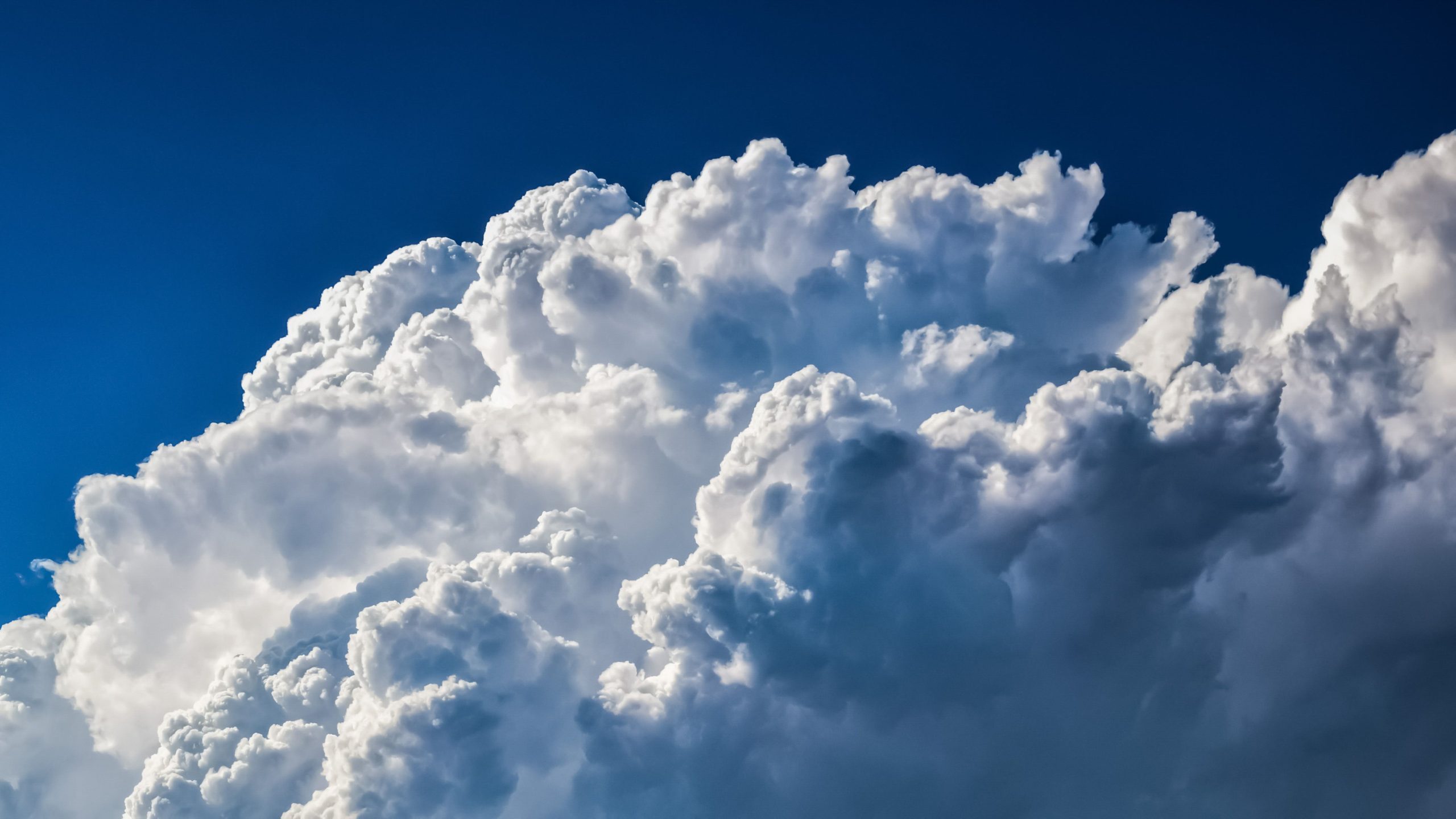
Kiddush levana, the sanctification of the moon, is regarded as a unique mitzvah, likened to greeting the Divine Presence (Shechina).¹ It is a brief ceremony recited during the first half of each lunar month. However, it depends on the moon’s visibility, making it subject to the changing weather conditions. In the Canadian winter, when the clouds seem ubiquitous and the moon is often concealed, the opportunity to recite kiddush levana can feel elusive. This article explores the considerations surrounding reciting kiddush levana when the skies are obscured.
Clouds block the bracha
Although not the earliest source² to discuss what to do when the moon is covered, the Radvaz³ is quoted by the later poskim⁴ as ruling that one may not recite kiddush levana unless the light of the moon reaches earth. He explains this by comparing kiddush levana to the bracha one recites over fire during havdala. Just as one must enjoy the flame of the havdala candle and be able to utilize the light to distinguish between two coins, so too by kiddush levana, one must see sufficient light to be able to distinguish between coins. Therefore, if a thin cloud covers the moon and its light is able to shine through the vapour and benefit man, one may recite kiddush levana; if the clouds are too thick and do not allow sufficient light to reach earth, one may not recite the bracha.
The Nesivos Hamishpat⁵ brings a proof to this approach from the language of the Rema⁶ who writes, “And one shall not sanctify the moon except at night at a time when the moon is shining and [people] benefit from its light.” Clearly, one may not recite kiddush levana when the moon is covered and its light is not visible.
Indeed, the Mishna Berurah⁷ accepts this approach. He rules that when thick clouds cover the moon and block its light, one may not recite kiddush levana. However, when a thin cloud blocks the moon, since one may benefit from its light, kiddush levana may be recited.
Another view
The ruling of these poskim is not without dispute. There seems to be a divergent approach.
The Gemara⁸ does not define the earliest time to recite kiddush levana. The rishonim contemplate this and reach various conclusions. The Rambam⁹ maintains that kiddush levana should be recited the first night of the new month provided that the moon is visible. Rabbeinu Yonah¹⁰ brings that one may only recite kiddush levana when the light of the moon is of benefit to someone on earth. This happens two or three days after the molad occurs.¹¹
The Rambam, who maintains one recites the bracha the first day of the month, before the time that the moon’s light is beneficial for people, clearly understands that kiddush levana is not a bracha one recites when benefiting from light of the moon. Instead, the bracha is recited when one sees the moon in its state of renewal. Rav Moshe Feinstein tz”l¹² writes that the approach of the Rambam is accepted by the Mechaber.
Accordingly, whether one may recite kiddush levana before the light of the moon is bright enough to benefit people is subject to disagreement.
The halacha
Practically, the Mishna Berurah writes that one must benefit from the light of the moon to say kiddush levana. One can determine this by imagining being in the middle of a blackout, with the only available light coming from the moon. If that light is strong enough that a person can benefit from it, he may recite kiddush levana. This will depend on the size of the moon and the thickness of the clouds. See footnote.¹³ In general, a barometer to use is when the shape of the moon can be clearly seen through the clouds, one may recite kiddush levana.
If one recited the bracha when thicker clouds covered the moon, another bracha should not be recited in deference to the approach that the mitzvah was fulfilled. Instead, that person should fulfill the mitzvah with someone else who is reciting the bracha, or, alternatively, say kiddush levana without using Hashem’s name.¹⁴ It would seem that one may also read from the Gemara or Tur which reads, “One who sees the moon in its state of renewal should recite בא”י אשר במאמרו,” for then he will be able to mention Hashem’s name when reciting kiddush levana. If kiddush levana must be recited (since he did not fulfill his mitzvah with his first recitation), this recitation will count as kiddush levana. If not, then Hashem’s name was not said for naught, as the person saying it did so in the context of learning the Gemara or Tur.¹⁵
Waiting for an unobstructed moon
Although one may recite kiddush levana when the moon is covered by a thin layer of cloud, some poskim¹⁶ maintain it is preferable to wait until the moon can be seen, without even a thin covering. However, if delaying kiddush levana may result in one being unable to fulfill the mitzvah (due to thickening clouds) or to lose out from saying it with a minyan,¹⁷ one should recite kiddush levana despite the thin cloud covering.
Partially covered
We have seen that when the moon is covered and the covering blocks the light of the moon from reaching earth, one may not recite kiddush levana. Oftentimes, part of the moon is covered by thicker clouds and part of the moon is not obstructed at all. May one recite the bracha when seeing such a moon?
One does not need to see the entire moon to recite kiddush levana.¹⁸ As such, even if only part of the moon is visible (and even if that small section is blocked by a thin cloud), if the light emanating from that section is beneficial (as defined earlier) one may recite the bracha. If not, then one would need to wait.
It is possible that even when that small section provides sufficient light to recite kiddush levana, since part of the moon is covered, according to the poskim who prefer that the moon not be obstructed by even a thin cloud, one should wait to recite the bracha.¹⁹ However, if delaying kiddush levana may result in one being unable to fulfill the mitzvah, one should not wait.
Covered during the bracha
A person who began reciting kiddush levana and did not finish the bracha before thick clouds covered the moon, may finish reciting kiddush levana. However, if before beginning the bracha he sees that this will happen, he should not start.²⁰ If he did, he may complete the bracha.²¹ If he is unsure, he may recite kiddush levana, and if the moon gets covered mid-bracha, he may finish.²²
One last thought
The Jewish people are compared to the moon. Kiddush levana symbolizes how the Jewish people, like the moon, will one day be restored to their full glory, their bright light not eclipsed by thick clouds. May the merit of this great mitzvah usher in this reality speedily, in our days.
RABBI YOSEF DOVID ROTHBART
Halachic Administrator at the Halacha Institute of Toronto (H.I.T.)
UNDER THE LEADERSHIP OF THE RABBONIM OF H.I.T.
Rabbi Yacov Felder, Chairman
[email protected]
416.535.8008
www.halachainstitute.com
- Halacha Line
- Rabbinic Mediation
- Pikuach Nefesh Issues
- Halachic Estate Consulting
- Halachic Business Consulting
Kashruth Council of Canada | www.cor.ca — 2024-5785 Halachic Corner, p. 10
COR, the Kashruth Council of Canada, is one of the world’s largest kosher certification agencies, certifying thousands of products, restaurants, and facilities. Learn more at cor.ca