
Our Monthly Meeting With The Creator
What is the appropriate time frame available to recite kiddush levana?
BY RABBI YOSEF DOVID ROTHBART
Background
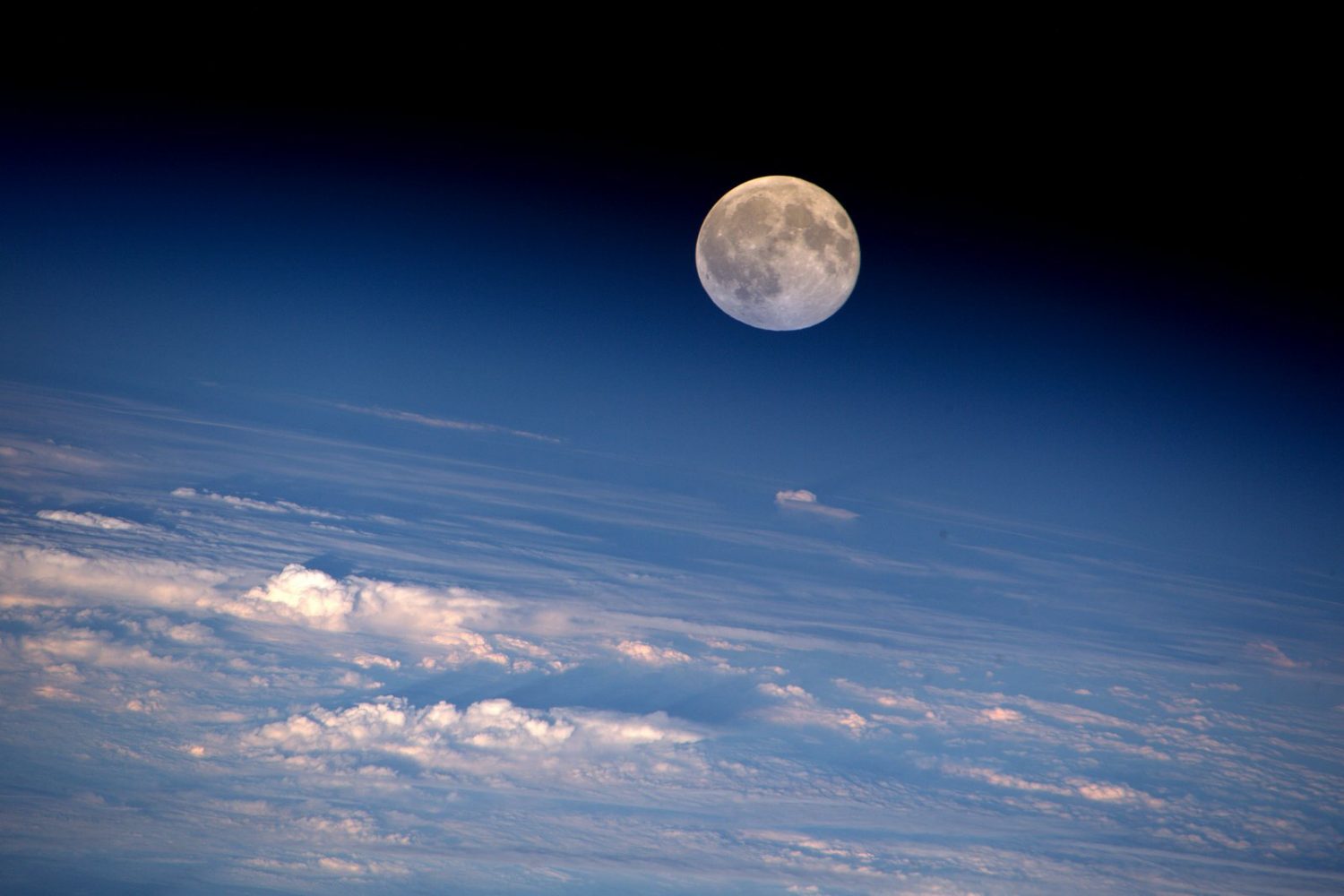
Each Jewish month, the moon goes through a cycle. At the start of the cycle, the moon is directly between the earth and the sun. Since the moon receives its light from the sun, only its back is lit up and it is not yet visible from earth. As the moon travels around the earth, its visibility increases until the middle of the month. At that point, the moon is directly opposite the sun and the moon’s side that is visible from earth is lit up entirely. From earth, this appears as a full moon. (This is why a lunar eclipse can only occur in the middle of the month, while a solar eclipse can only occur at the beginning of the month.) The moon’s rotation continues until it returns to its starting position, where it will once again begin the lunar cycle. The beginning of the lunar cycle is the molad (lit. the birth of the moon). Chazal instituted that we mark this phenomenon by reciting kiddush (birkas) levana.
Blessing the month
“Whoever blesses the month in its time is tantamount to greeting the Shechina.”¹ The rebirth of the moon demonstrates that world was created and sustained by Hashem. And just as He diminishes the glow of the moon and renews it monthly, so too He created the world from nothing and could reduce it to such a state were He to desire this. Through the immutable monthly cycle, Hashem reveals Himself to us. And when one recites kiddush levana and testifies that Hashem is the creator, it is seen as if he greeted the Shechina.²
“If the Jewish nation only merited to greet their Father in heaven each month, that would be sufficient.”³
Earliest day to recite
The molad that is used as a reference point (and is announced in shuls) is the molad of Yerushalayim.
The Gemara⁴ does not define the earliest time to recite kiddush levana. The rishonim contemplate this and reach various conclusions:
- Rabbeinu Yonah⁵ in the name of Maseches Sofrim states that kiddush levana may only be recited when the light of the moon “ripens” (משתבשם). He explains this to mean when its light is of benefit to someone on earth. This happens two or three days after the molad occurs.⁶
- The Rambam⁷ disagrees with Rabbeinu Yonah’s position and maintains that kiddush levana may be recited from the first night of the new month provided that the moon is visible.
- The Beis Yosef⁸ in the name of Rav Yosef Gikatilla (Sha’arei Orah) presents a third position which asserts that kiddush levana may not be recited prior to the seventh night of the month.
The Shulchan Aruch⁹ paskens like Rav Yosef Gikatilla. Rav Ovadia Yosef zt”l qualifies this to a situation in which it is reasonable to believe that kiddush levana would be able to be recited after the seventh day. However, if there is concern that the mitzvah would not be available if we were to wait until the seventh day, then it may be recited already from the third day. This is somewhat common in the winter months where clouds populate the sky.¹⁰ The Rema does not comment on the Shulchan Aruch. It would seem, therefore, that the Rema agrees to this ruling. However, many achronim disagree and allow recital from the third day even l’chatchila. This is the position of the Mishna Berura.¹¹
A review:
Before three days pass from the molad: Kiddush levana should not be recited. However, if it is accidentally recited then it should not be repeated since the first opinion maintains that kiddush levana can be recited as soon as the moon is visible. If possible, this person should ask someone to be motzi him.¹²
From three days after the molad: Those who follow the p’sak of the Mishna Berurah¹³ may recite kiddush levana from 72 hours after the molad.¹⁴ The Mishna Berura¹⁵ adds that if this would coincide with a weekday then one should wait until motzei Shabbos to be mekadesh the levana. However, he quotes a dissenting opinion from the Gr”a who believes that it should be recited during the week as soon as 72 hours have past.¹⁶ The Mishna Berura concludes that during the winter, when waiting may cause a person to miss the mitzvah, kiddush levana should be recited at the first opportunity.
Seven days after the molad: Those who follow the p’sak of the Shulchan Aruch should recite kiddush levana at this time. There is a discussion amongst Poskim whether these seven days must be full 24-hour periods from the molad or rather seven calendar days.¹⁷
Time of day to recite
Even if the moon is visible during the day, one may not recite kiddush levana. Only after tzeis hakochavim may one recite this bracha.¹⁸ Before tzeis, one will not benefit from the moon light; additionally, the role of the moon is to reign and provide light at night, therefore it is appropriate to recite kiddush levana only after nightfall.¹⁹ One may recite kiddush levana throughout the entire night.²⁰
Latest day to recite
Since kiddush levana is recited when the moon is in its state of renewal, once the moon reaches its zenith, one may no longer recite kiddush levana.²¹ According to the Shulchan Aruch, the moon reaches this state fifteen twenty-four-hour periods after the molad (as defined above). This means that if the molad occurred on Sunday, six hours into the night, one may recite kiddush levana until the following Tuesday, six hours into the night.²² The Rema however argues that the length of a Jewish month is twenty-nine days, twelve hours and 793 chalakim (a chelek is 3⅓ seconds). Accordingly, once the halfway point of the month is reached (fourteen days, eighteen hours and 396.5 chalakim), then the moon is no longer in its state of renewal, and one may no longer recite kiddush levana. One should do their utmost to recite kiddush levana within the time prescribed by the Rema; however, if someone was unable to do so, he should still rely on the ruling of the Shulchan Aruch.²³
The Biur Halacha²⁴ brings that one may still recite kiddush levana on the sixteenth day. As long as the moon still appears to be full, one may still recite kiddush levana.²⁵ Practically, he concludes that if one did not recite kiddush levana before the sixteenth day, kiddush levana should be said without mentioning Hashem’s name. Others²⁶ suggest reading the Gemara or Tur which states, “One who sees the moon in its state of renewal should recite בא”י אשר במאמרו,” for then he will be able to mention Hashem’s name when he recites kiddush levana. If kiddush levana may still be recited, this will count as kiddush levana. If not, then Hashem’s name was not said for naught, as the person saying it did so in the context of learning the Gemara or Tur.
After a lunar eclipse, when the earth comes between the sun and the moon, blocking the sunlight from reaching the moon, one may not recite kiddush levana.²⁷ Since a lunar eclipse happens at the exact midpoint of the month, when one occurs, it is clear that the midpoint of the month has been reached and the moon is no longer in a state of renewal. (Although the calculations used to determine the molad indicate otherwise, these calculations are based on an average month.) As such, kiddush levana may no longer be recited. Some say to recite kiddush levana without mentioning Hashem’s name.²⁸
Conclusion
As we discussed above, by reciting kiddush levana, we greet the Shechina. May the merit of this mitzvah bring us closer to the day when we experience the Shechina in our midst. ∎
Rabbi Rothbart is the Rabbinic Administrator at the Halacha Institute of Toronto (H.I.T.)
Kashruth Council of Canada | www.cor.ca — 2022 / 5783, Halachic Corner
COR, the Kashruth Council of Canada, is one of the world’s largest kosher certification agencies, certifying thousands of products, restaurants, and facilities. Learn more at cor.ca, or read about our certification services at corkosher.com.