
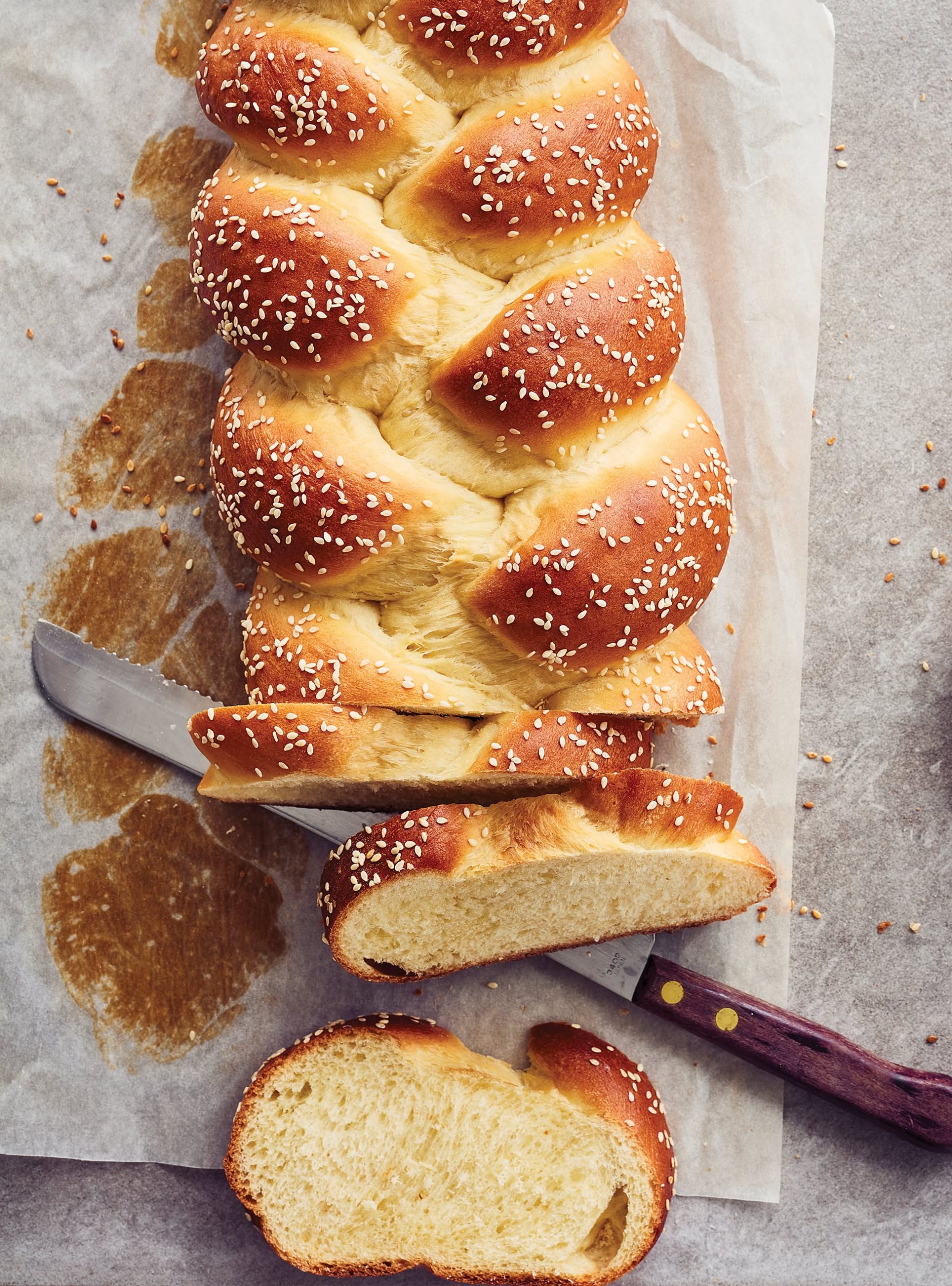
by Rabbi Noam Gottlieb
Since the onset of the recent war in Gaza, starting on Simchas Torah with the devastating pogrom, Klal Yisroel has been actively mobilizing on a spiritual front. Extra stringencies have been embraced, along with fervent tefila for the sake of the safe return of the hostages and safety of the troops fighting in Gaza. Among our arsenal of weapons in this war is the mitzvah of separating challah. Stories of courageous women who have embraced this special mitzvah in the merit of our brethren, witnessing genuine salvation, have spurred a movement.
“Among our arsenal of weapons in this war is the mitzvah of separating challah.”
Women gather together for public challah bakes as a means of prayer and a conduit for their emotions, beseeching divine intervention. This act, known simply as a “challah bake,” has become a powerful symbol. Like all mitzvos in the Torah, there are numerous laws and details that must be meticulously followed to ensure proper observance of the mitzvah of separating challah.
While the bread we traditionally braid for Shabbos is called “challah”, not all “challah” requires separation. The Shulchan Aruch explains that the volume of flour required to trigger the obligation to separate challah is equivalent to the biblical measurement of 43.2 eggs’ worth of flour. However, the exact size of a biblical egg is a subject of debate amongst the Poskim. Consequently, the amount of flour required to trigger the obligation to separate challah varies from 2.5 pounds (8 cups) of wheat flour to 5 pounds (16 cups). Accordingly, for doughs made with over 2.5 pounds of wheat flour, challah should be separated without a bracha, and for doughs made with 5 pounds and above, with a bracha. This minimum requirement is referred to as the “shiur challah”.
This is where the challah bake can become complicated. The obligation to take challah begins when dough is kneaded with the intent to make bread from the entire batch for one person or family. However, if an individual plans to divide a large dough into small pieces each containing less than the shiur challah in order to distribute to many people, then there is no obligation to separate challah. If each of the divided individual pieces would exceed the shiur challah, then it is not clear among the Poskim as to whether it is allowed to create the necessity of making many brachos by dividing the dough for many people.
To avoid these issues during a challah bake, individuals should each make their own dough which meets the minimum shiur challah, make a bracha and separate challah; or knead between 2.5 and 5 pounds of dough each and respond “amen” to the bracha of someone who used 5 pounds before taking challah to be yotzei with their bracha. Alternatively, a single large dough can be made, and one person can make the bracha (to which everyone can respond amen) and separate challah before dividing it while ensuring that person retains a challah-sized portion for themselves. By doing so, one fulfills the mitzvah of separating challah.
When separating challah, many separate a small portion (kizayis) of the dough and place it on the larger portion of dough prior to making the bracha. After the bracha that piece of dough should be lifted up and then one should say “harei zu challah” or “this shall be challah”.
In ancient times, dough was separated as challah then given to the Kohen and consumed by the Kohen in a pure state. However, in our current state of ritual impurity (tumah), the separated challah must be disposed of respectfully and quickly. While burning challah is the common method, it can pose potential issues. Challah, like other priestly gifts, is considered non-kosher when ritually impure and can render other things that it comes into hot contact with as non-kosher. Therefore, when burning the challah, extra care should be taken to properly wrap the piece to prevent contact with other things. As well, the challah should not be burned in an oven while other food is being baked. If this is not possible, one can double wrap it and dispose of it in the garbage to ensure respectful handling.
May Hashem hear our prayers that we should soon be giving challah in full ritual purity and may we merit to eat the korban pesach still this year in Yerushalayim.
Rabbi Noam Gottlieb
Senior Mashgiach
Kashruth Council of Canada | www.cor.ca — 2024-5784 Passover Guide, pp. 56–57
COR, the Kashruth Council of Canada, is one of the world’s largest kosher certification agencies, certifying thousands of products, restaurants, and facilities. Learn more at cor.ca, or read about our certification services at corkosher.com.