
A Halachic Discussion
BY RABBI YECHIEL TEICHMAN
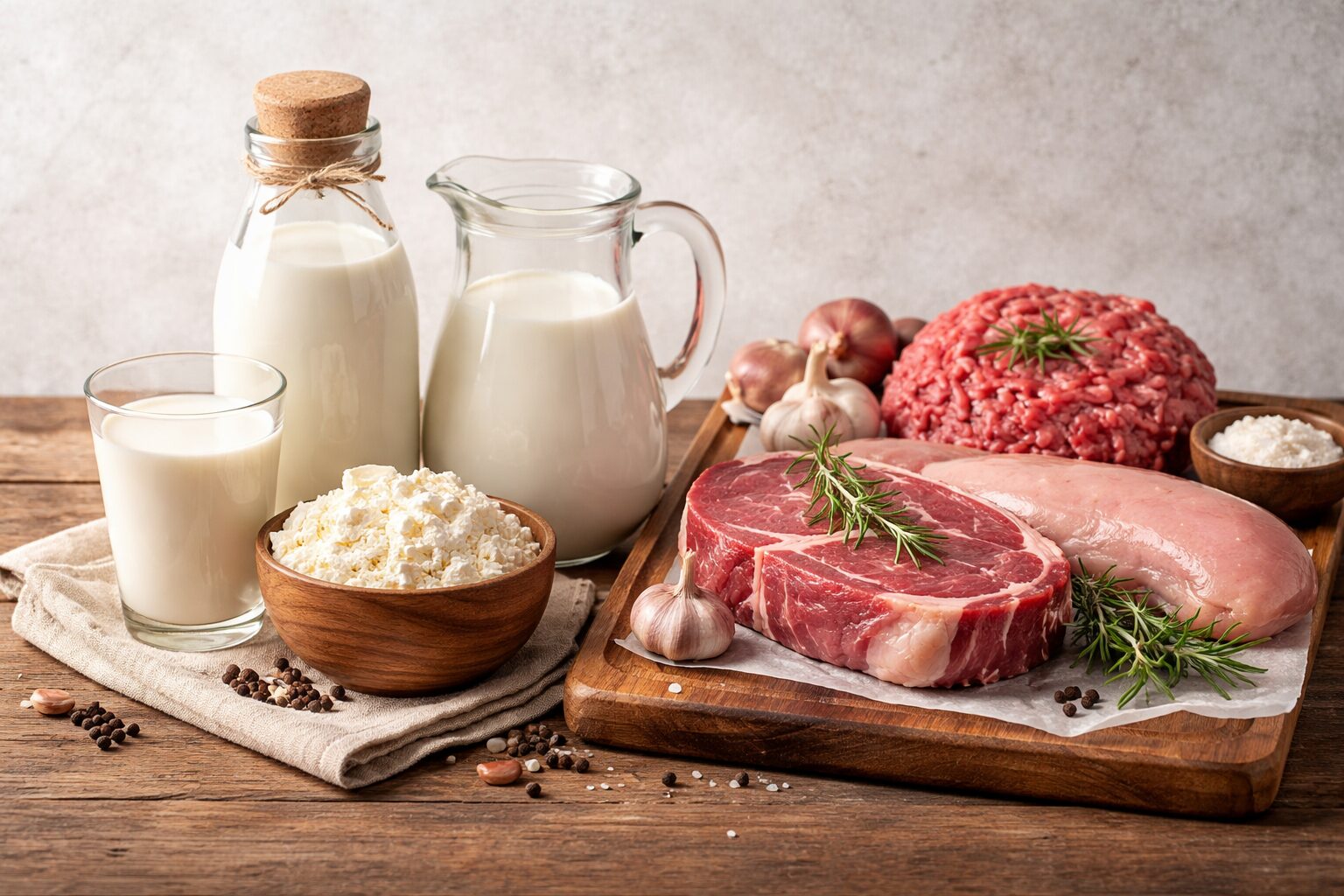
The requirement to wait after eating meat before consuming dairy is well known. But what must be done before eating meat after having dairy?
The Shulchan Aruch¹ paskens that a person may eat meat after eating cheese without waiting, provided that his hands are clean from cheese,² and that he cleaned out his mouth by eating and drinking (kinuach v’hadacha).
Kinuach (wiping) can be done by eating any bulky food besides flour, dates and green vegetables, as these foods tend to stick to the palate. Hadacha (rinsing) is done by drinking.
The Poskim discuss whether brushing one’s teeth and rinsing afterward is an acceptable alternative to cleaning the mouth.³ The consensus among many contemporary Poskim⁴ is that brushing is not as effective as eating something. Eating food wipes the surface of one’s entire mouth (i.e. teeth, gums, and palate), while brushing only cleans a small area of the mouth, namely the teeth.
If one does not have any parve food to eat between milk and meat, Rav Shlomo Miller advised that brushing carefully one’s entire mouth, and rinsing would be an acceptable substitute for eating something.
The Gr”a⁵ and the Pri Chadash⁶ write based on the Zohar that one should not eat meat immediately after eating cheese; instead, he should wait one hour and bentsh before doing so. A common minhag is to wait one half-hour. According to some Poskim waiting this length of time and bentshing fulfills the Zohar’s instruction.
The requirement to perform kinuach v’hadacha applies to someone who wishes to eat meat right after eating cheese. Does that requirement extend beyond that time-frame? After how much time can we assume no dairy residue remains?
Many Poskim (Emes L’Yaakov Yoreh Deah note 37, see also Psakim U’tshuvos) say that once one hour passes, kinuach v’hadacha are no longer required. Waiting one hour accomplishes what kinuach v’hadacha accomplishes. A source for this approach can be found in the Shach. The Mechaber⁷ requires waiting six hours after eating meat before eating dairy. The Rema writes that some maintain that if one finishes eating, bentches and does kinuach v’hadacha, he may eat cheese. The Rema continues by stating that where he lived, the accepted minhag was to wait one hour. The Shach⁸ writes that after one hour passes and one’s mouth seems to be clean, kinuach v’hadacha is not required. The requirement for kinuach v’hadacha is only relevant according to the approach that allows eating cheese immediately after bentching. If one waits before eating cheese, however, then kinuach v’hadacha is not required. These Poskim argue that if waiting one hour obviates the need for kinuach v’hadacha after eating meat, then certainly it does so after eating cheese, since eating meat after dairy is more lenient. (Minchas Yaakov, however, writes that one should be machmir and follow the approach of the Taz who requires kinuach v’hadacha even when one waits after eating meat, as does the Pri Megadim.⁹ The Pri Chodosh¹⁰ and Eliyohu Rabah¹¹ follow the Shach. The Chochmas Odam¹² explains the Rema according to the Shach’s understanding. This question is relevant for someone who is ill and must eat dairy soon after consuming meat.)
According to the aforementioned Poskim, those who wait one half-hour after dairy must do kinuach v’hadacha before eating meat. Indeed, Basar B’chalav (R’ Zev Hofstedter) quotes Rav Moshe Shaul Klein who advises that the public should be made aware of this requirement. On the other hand, some Poskim (Rav Moshe Aryeh Freund, Rav Shlomo Zalman Ulman) maintain that after one half-hour passes from when one ate dairy, kinuach v’hadacha are no longer required.
Rav Refoel Blum, (Kashau Rav in sefer Birchos Shamayim Y.D. 22) writes that it is proper to do kinuach v’hadacha even after waiting one half-hour. However, he finds justification for those who wait one half-hour after eating soft cheese, and only rinse their mouth — hadacha without kinuach — before eating meat.
This is based on the following two reasons:
- The Rashash¹³ asserts that after drinking milk one may clean his mouth by doing hadacha (rinsing) alone; kinuach is not required. Kinuach is only required when one eats (semi-hard) cheese which sticks to the mouth. Rav Blum suggests that butter, yogurt and soft cheese is similar to milk and hadacha suffices according to the Rashash.
- The Rashb”a (quoted by the Gr”a¹⁴) maintains that between eating dairy and meat it is enough to do either kinuach or hadacha. Although the Shulchan Aruch requires both, Eliyohu Rabah¹⁵ paskens that hadacha is enough. Where one half-hour has already passed, and one ate soft cheese, one may rely on the Eliyohu Rabbah and eat meat after doing hadachah alone.
Rav Blum concludes that, although it is better to do kinuach v’hadacha, the general practice to rely on hadachah after waiting one half-hour after eating soft cheese is justified.
As in all matters of halacha one should consult with their Rav to determine which custom to follow.
RABBI YECHIEL TEICHMAN
Rabbinic Administrator and Halachic Advisor
NOTICE REGARDING UNKASHERED LIVER
Please be advised that as per a decision of the Rabbis of COR’s Rabbinical Vaad HaKashruth, unkashered liver is no longer being sold in Toronto. The Rabbis heard many unfortunate stories from kosher consumers who purchased unkashered liver in supermarkets and served them in their homes without the necessary kashering. Detailed kashering instructions were previously included on the packaging of unkashered liver, but it seemed that too many people were not careful enough to read these instructions properly. This is the reason why none of the other major kashrus organizations with whom we consulted permit the sale of unkashered liver to consumers. Ultimately, this is why the Rabbis decided that selling unkashered liver in Toronto is too great of a risk to justify.
We would like to note that prior to making this decision, we conferred with local proprietors who reassured us that they have the capacity to kasher liver in Toronto to meet the needs of kosher consumers in the city.
In previous generations, shechted chickens were sold without being fully kosher as they still required soaking and salting to remove forbidden blood. Over time, this was phased out and kosher certifiers only permitted the sale of fully kosher chickens to end consumers as the expertise of kashering chickens at home became less well known. Similarly, kosher certifiers today do not permit the sale of chicken livers that are not yet kosher. COR’s recent decision brings us in line with the industry standard in place amongst kosher certifiers today.
Kashruth Council of Canada | www.cor.ca — 2024-5785 Halachic Corner, pp. 8–9
COR, the Kashruth Council of Canada, is one of the world’s largest kosher certification agencies, certifying thousands of products, restaurants, and facilities. Learn more at cor.ca, or read about our certification services at corkosher.com.