
BY RABBI TSVI HEBER
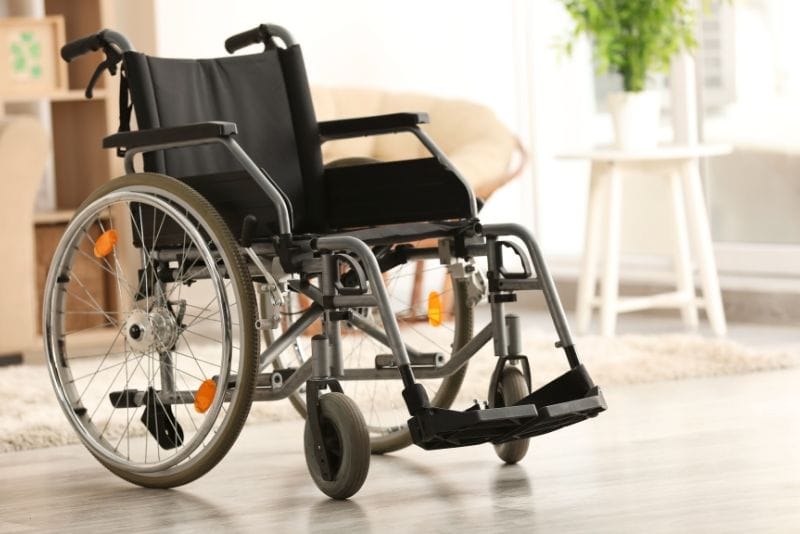
The mitzvah to honour a father and mother includes being their caregiver, when needed. Feeding them, dressing them, walking with them and pushing them in a wheelchair are all part of this important mitzvah.¹ Granted, it is not always practical for children to be present for their parents to the extent that is required to fulfill the mitzvah properly, and often, caregivers are hired to care for parents in their stead. This can lead to a financial burden which is essentially the parents’ responsibility but which may ultimately fall on a child.² It is quite common for a non-Jewish caregiver to work or even live inside the home of an elderly parent. In this scenario, there are important kashrus concerns that have to be thought through and addressed.
The first kashrus challenge for seniors with non-Jewish caregivers is ensuring their food is bishul Yisroel – cooked by a Jew and not bishul akum – cooked by a gentile. If kosher food which is inedible in its raw state³ and fit to be served at a banquet⁴ is cooked by a gentile, it is rendered bishul akum, which is not kosher, even if it is cooked for seniors who are unwell or incapacitated.⁵ If this happens, the cookware also becomes non-kosher and needs to be kashered.⁶ Relying on the senior to ignite the stove or oven is not generally a practical option. Without proper attention, a senior’s entire kitchen, even their expensive china, might need kashering.⁷
There are important kashrus concerns that have to be thought through and addressed.
Our friend, Dr. Shabtai Nacson, has proposed an innovative solution to this challenge. Wifi plugs have become popular energy-saving products which allow a user to remotely ignite and extinguish electrical lights and appliances. Some kashrus agencies use these tools to control bishul Yisroel in kosher establishments where a mashgiach is not available in person. Plugging a home cooking appliance into a wifi plug can allow for the control of a senior’s appliance. However, using the wifi plug does not completely resolve the problem. This is because plugs are not exclusive, meaning they do not generally disable the appliance from being operated independently and manually on site by the caregiver. Use of the wifi plug requires the child’s attention to ensure that the appliance is only being operated by them, remotely. A nanny-cam pointed at the appliance is a helpful tool to ensure the caregiver is in compliance.
Unfortunately, bishul akum is not the only concern. Another concern is that a caregiver might purchase and prepare non-kosher food, even if solely for their own consumption. More likely, a caregiver may accidentally mix meat and dairy products that are in the fridge in the parent’s home. While Rav Moshe Feinstein zt”l⁸ prohibited parents from leaving young children with caregivers while they are on vacation, it is quite likely that he would allow older children to hire caregivers to be with their senior parents even for extended periods of time.⁹
However, choosing to go this route comes with significant responsibilities. The child must ensure that the caregiver is fully trained in the laws of kashrus. Be aware that someone who does not keep kosher is easily confused by the complexities of these laws and detailed directives are necessary. This includes clear differentiation between dairy, pareve and meat as well as guidance regarding the identification of kosher symbols on products. The caregiver must further understand that there are religious consequences that an error or mishap has on the parent. The child must create a genuine “mirsas”, literally fear, such that the caregiver should never knowingly or carelessly be in violation of kashrus.¹⁰ An authentic “yotze v’nichnas” environment must be created. This means that the child and/or a neighbour or friend can and does pop in at any moment without prior notice.¹¹ The child must have a key and free access to enter the home at any time. When leaving on vacation, the child must secure a replacement to check on their parent even for reasons of kashrus.
As is the case in all areas of halacha, one should seek specific guidance from their Rov or a kashrus professional to ensure that their personal situation adheres to the dictates of halacha. ∎
RABBI TSVI HEBER
Director of Community Kosher
Kashruth Council of Canada | www.cor.ca — 2025-5785 Passover Guide, pp. 54–55
COR, the Kashruth Council of Canada, is one of the world’s largest kosher certification agencies, certifying thousands of products, restaurants, and facilities. Learn more at cor.ca, or read about our certification services at corkosher.com.