
BY RABBI YECHIEL TEICHMAN
In general, cooking food on Shabbos is prohibited. But what about something that has already been cooked and is simply being reheated? This is permitted by the principle, ain bishul achar bishul b’davar yaveish, meaning that when it comes to dry food there is no prohibition of cooking once an item has already been cooked.
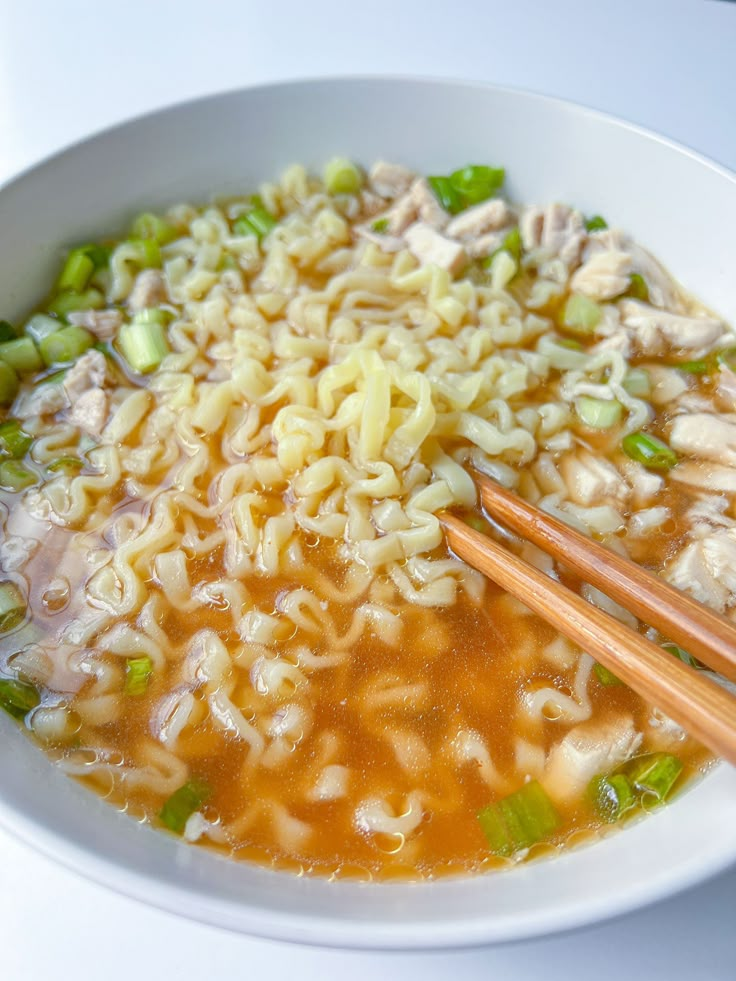
Does this apply to a cup of instant noodle soup on Shabbos? If the noodles were fully cooked and then dehydrated, the rule of ain bishul achar bishul b’davar yaveish should apply. On the other hand, some brands are not fully cooked, and would certainly not be allowed. The spice pack may also contain uncooked components, which may be subject to bishul.
In addition, perhaps there is an issue of makeh b’patish, namely, the prohibition of applying the finishing touches on an item. But does this prohibition apply to food? The Shulchan Aruch (318:4) says one may not pour hot water on salted fish, as this completes the food. The Rema adds that hard foods which are not edible may not be placed in hot water. Some learn that this is prohibited because of bishul (cooking), while others learn it is makeh b’patish. The difference will be if it was already cooked, and became hard, i.e. mevashel, then if it was already cooked, it would be permitted due to the principle of ain bishul achar bishul. If the prohibition is makeh b’patish, it is likely prohibited even if it was cooked (see Shevet Halevi 8:63).
The Pri Megadim states that the prohibition of pouring hot water on salty fish is makeh b’patish. The Biur Halacha discusses this opinion and argues that according to this reason it should be assur to soak the fish in cold water if it makes the fish edible. He concludes by stating that the idea of makeh b’patish with respect to food items is a novelty that is not found in the poskim, and therefore, one can be lenient to soak fish in cold water.
Rav Shlomo Miller said that even if one wants to be inclusive of the opinion of the Pri Megadim that generally speaking makeh b’patish is extant with respect to food items, it would not apply to instant food that will be consumed immediately. The source in poskim for makeh b’patish in food items is Tshuvas Harashba 4:75. There he quotes the Talmud Yerushalmi (Shabbos 7b) that makeh b’patish applies in food items. However he proves from the Talmud Bavli (Shabbos 140a) that makeh b’patish in food preparation does not apply when prepared for immediate consumption.
Therefore, if one is certain that the noodles were fully cooked, there would be no prohibition of pouring hot water on the noodles on Shabbos. However, since some brands are not fully cooked it may be wise to avoid this practice to prevent mistakes from happening.
The other issue is the spice pack and dehydrated vegetables that often accompany instant noodles, which may not be cooked. The Shulchan Aruch (318:10) writes that it is assur to pour hot water onto tavlin (spices) from a k’li rishon (primary vessel). The Mishnah Berura writes that one may put tavlin into a k’li sheni (secondary vessel), as tavlin are not kalei habishul (easily cooked). Clearly one may not pour water from the urn directly onto the spices, but what about adding the spices to the water?
Rav Shlomo Zalman Auerbach is quoted as having said that finely ground spices are perhaps cooked even in a kli sheni. Rav Shlomo Miller agreed that if ground to a powder it may be kalei habishul, and added that the rule that tavlin are not kalei habishul does not necessarily apply to all spices. Rav Miller brought a proof from a seemingly unrelated Rashba in Chulin 6a. The Rashba says that not all tavlin are equal, some are like food and are subject to tumah, while others are not like food and are only subject to tumah when combined with food. Likewise regarding bishul perhaps not all tavlin have the same status and some may actually be kalei habishul. One must therefore be careful not to put the spices into hot water. Furthermore, according to the Chazon Ish, one may not even put kalei habishul into a hot kli shlishi.
Back to our original question: instant noodle soup for Shabbos? Perhaps not the best idea, but certainly food for thought!
Rabbi Teichman is a Rabbinic Administrator and Halachic Advisor at COR
Kashruth Council of Canada | www.cor.ca — 2022 / 5783, Halachic Corner, pp. 4–5
COR, the Kashruth Council of Canada, is one of the world’s largest kosher certification agencies, certifying thousands of products, restaurants, and facilities. Learn more at cor.ca, or read about our certification services at corkosher.com.