
What transforms a house into a Jewish home? Is it the guests gathered around the table, the values passed from parent to child, the quiet acts of community-building, or the indescribable feeling of finally coming home?
In this Inspiration CORner section, we explore each of these dimensions. You’ll meet the inspiring individuals and communities who practice hachnasas orchim — opening their doors, their tables, and their hearts to welcome others in. You’ll gain insight from Rabbi Bender and Dr. Geft on nurturing children and cultivating strong Jewish identity within the home. You’ll meet dedicated matchmakers behind Toronto’s Shidduch Initiative, working tirelessly to help young people build homes of their own. And you’ll be moved by powerful reflections on captives who have returned home from Gaza, reminding us never to take the meaning of “home” for granted.
OPEN DOORS, OPEN HEARTS
Hachnasas Orchim and the Power of the Jewish Home
This magazine explores The Jewish Home — what transforms a house into something sacred. Is it the aroma of Yom Tov cooking? The tunes? The stories passed around the table?
Perhaps more than anything else, it is the moment the door opens to someone outside our immediate family. Because a Jewish home is not only built for those who live inside it. It is built for those who enter.
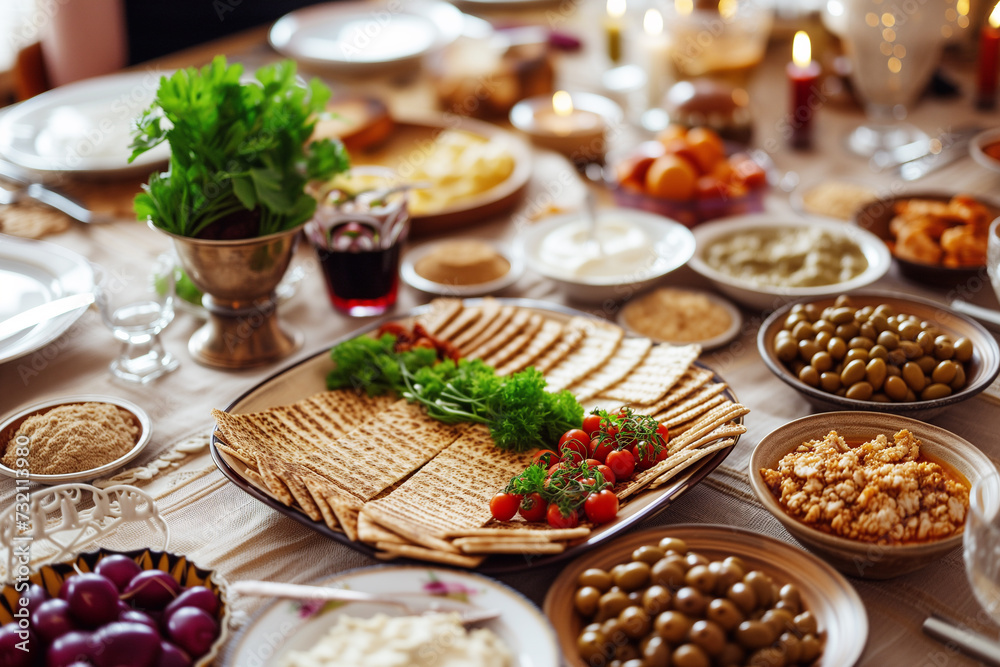
Every Pesach night, we declare, “Kol dichfin yeitei v’yeichol — Let all who are hungry come and eat.” It is a proclamation of radical hospitality. Not metaphorical. Not symbolic. Practical. Concrete. Real.
Across Toronto’s Jewish community, that invitation is lived every week — through organized chesed committees, through Seders that preserve ancient traditions, and through kitchen tables that stretch to fit one more chair.
To understand how hachnasas orchim lives today, we spoke with three communities and three households who embody it: Esty Yeres and Shayna Friedman of the BAYT Chesed Committee; Eric Iankelevic, president of Petah Tikvah Anshei Castilla; and Joely Bernstein of Shomrei Shabbos Chevra Mishnayos, whose Shabbos table has become a home for many who once had none.
Their stories show that hospitality is not only something we do. It becomes something we are.
“Every Pesach night, we declare, ‘Kol dichfin yeitei v’yeichol — Let all who are hungry come and eat.’ It is a proclamation of radical hospitality. Not metaphorical. Not symbolic. Practical. Concrete. Real.”
A community-wide table: BAYT’s network of care
At BAYT in Thornhill, hospitality is woven into the infrastructure of community life. Under the umbrella of the BAYT Chesed Committee are eight subcommittees: hospital visits, rides to appointments, meal trains, food drives, welcome baskets, senior tech support, “Keeping in Touch,” and Shabbat hospitality.
The Shabbat hospitality arm, co-chaired by Esty Yeres and Shayna Friedman, quietly ensures that no one spends Shabbat alone.
“The original reason was very practical,” Estee explains. “There’s no hotel, motel, or Airbnb within walking distance of BAYT. When someone had a simcha, their out-of-town guests were, frankly, stuck. So families opened their homes.”
But what began as logistical necessity soon revealed a deeper need.
“As the Thornhill community grew and matured,” Estee continues, “we unfortunately had more widows and widowers, more divorced individuals, more singles — people who might feel shy about asking for a meal or worried about imposing on relatives. Shabbat hospitality became a way to make sure someone isn’t eating alone.”
Shayna adds, “Our biggest focus is anyone who is alone. Widowed, divorced, not yet married, a spouse in hospital, children out of town — anything that leads to someone spending Shabbat alone. Often, they’re shy to reach out. So we try to find them.”
Requests arrive through a dedicated chesed email address. Others come through rabbanim, shul staff, or the “Keeping in Touch” committee, which calls members who are ill or grieving and simply asks: What do you need?
Behind the scenes, Shayna and Estee act, in their words, “a bit like shadchanim.” They match guests to hosts based on walking distance to shul, family composition, spare bedrooms, accessibility needs, and personality fit.
“There’s a person who knows the community,” Estee explains. “Who has a pack-and-play, who has a spare bedroom, who has a room on the main floor, who lives in a condo with a rentable suite. It’s complicated — but organized.”
Safety and dignity matter too. Unknown guests require references. Extended stays are divided between multiple homes, so no host family is overwhelmed. Even walking routes between meals and sleeping arrangements are considered to keep guests comfortable.
And the committee doesn’t only respond to requests.
“We also try to identify people who may need support but wouldn’t necessarily reach out,” Shayna says. “It’s two-fold — responding to requests and proactively looking out for people.”
What keeps volunteers going?
“You have to like doing it,” Estee says simply. “Sometimes you get a call Friday afternoon that plans fell through and someone needs a place. Shayna and I really love doing this.”
They speak warmly of the volunteers who open their homes week after week — so warmly, in fact, that the committee hosts an annual appreciation dinner for its subcommittee chairs.
“We want them to feel valued,” Estee explains. “We don’t want people taken for granted. When people feel appreciated, they keep doing the work.”
And the work bears fruit beyond meals.
“One family from Detroit needed hospitality because their kids were in camp,” Estee recalls. “We matched them with a Toronto family whose kids were in the same camp. Later, the Toronto family needed hospitality in Detroit — and that relationship turned into a real friendship.”
Older singles who first arrived as guests begin hosting each other. Out-of-town visitors become part of the community fabric. Hospitality becomes connection.
Sometimes, the need is dramatic.
“A visitor got to the airport to fly to New York on erev Shabbat,” Estee recounts. “A storm cancelled the flight. Their luggage went — but they didn’t. We had to place them last minute. The host family even went around their street collecting clothing for them because the guest had nothing. That’s what it means to be ready for the unexpected.”
But the committee is equally attentive to hosts’ limits.
“We don’t want burnout,” Shayna says. “Hosting should stay positive. Sometimes we even have to tell guests: Shabbat lunch is a two-hour affair — we love you, but please don’t stay all afternoon.” She laughs. “And yes, sometimes it’s, ‘Here’s your coat.'”
The goal is simple: a system where kindness is sustainable.
Hospitality as heritage: the open doors of Petah Tikvah
If BAYT demonstrates hospitality as communal care, Petah Tikvah Anshei Castilla shows hospitality as cultural preservation.
Led by president Eric Iankelevic, Petah Tikvah carries a rare Spanish-Moroccan Tangiers Sephardic heritage — a lineage stretching back to families who fled the Spanish Inquisition and rebuilt their lives in North Africa.
“Our prayer style, melodies, customs, and holiday practices are part of a very specific Tangiers tradition,” Eric explains. “Preserving that authenticity is central to our mission.”
One of the most powerful tools for preserving tradition, he believes, is inviting people into the home — especially at Pesach.
“In our families, certain parts of the Haggadah are recited in Spanish,” he says. “We use a Haggadah with Hebrew, English, and Spanish. But with each generation, language becomes harder to maintain. My children don’t hear Spanish at home the way I did. When we invite guests to our seder, they experience the melodies, pronunciations, and rituals firsthand.”
Guests witness Bibiluya, the tradition of passing the seder plate over each participant’s head while blessings are recited. They hear chants rarely found in commercial Haggadot. They taste foods their grandparents once made. What might have become a museum artifact becomes a living experience.
“When families who may have lost certain customs join our seder,” Eric says, “their children get to experience traditions that might otherwise disappear.”
The shul reinforces this mission through community projects — Ma’ot Chitim for Pesach assistance, year-round financial support for struggling families, care packages for seniors who can no longer attend shul, Hanukkah kits for university students away from home, and a community Purim seudah so no family feels left out of celebration.
“No one in the community should feel forgotten,” Eric says.
Perhaps the most vivid expression of Petah Tikvah’s open-home culture is Mimona — the Moroccan celebration marking the end of Pesach.
Since moving to Clanton Park, Eric and his wife have opened their home every Mimona night to the entire community. Older members reconnect with childhood memories. Younger generations experience the celebration for the first time. Neighbours and friends discover new traditions.
“People pop in and out throughout the evening,” Eric says. “We serve mufletta and traditional pastries. We often have three to four hundred visitors in one night.”
For Eric, hosting is also education for his children.
“Hosting reinforces identity,” he explains. “My children see that what they grew up with is special. They participate — singing Spanish songs, performing Bibiluya, blessing the family. We hope they will one day carry these traditions into their own homes.”
His advice to would-be hosts is straightforward.
“Speak to your rabbi. Speak to the shul office. Ask people what their plans are. Sometimes elderly couples who once hosted large seders now find themselves alone because children are elsewhere. Simply asking opens doors.”
Hospitality, he believes, begins with awareness.
When guests become family: the Bernstein home
If the BAYT shows organized hospitality and Petah Tikvah shows heritage hospitality, Joely Bernstein and her husband Shimmy show hospitality of the heart.
Hosting became central to their lives not because they planned it, but because they needed it.
“Hosting became central to our lives early on — not because we had so much family around us, but because we didn’t,” Joely says. “And in the process of giving and sharing, our guests returned again and again until they were no longer guests. They became our family.”
She admits with warmth that she didn’t even know how to cook when she got married. She learned from her husband Shimmy. At first, she worried endlessly about food. Then she realized the truth.
“Hosting was never about the food,” she says. “It was about the company. The conversation and the connection mattered far more than what was on the table.”
Over time, people began calling weekly — sometimes hours before Shabbos — asking if they could come. Folding tables came out. Dining room tables stretched into living rooms. Space was never the point.
“There’s a real need out there,” Joely explains. “People would call and say, ‘I don’t know who else to ask.’ And that stayed with me.”
Her understanding of hospitality evolved as her guest list grew more diverse.
“The deeper chesed lies in making space for those who are harder to host,” she reflects. “Those guests often need more attention, more patience, more emotional presence. You have to make sure your social batteries are charged — and you have to find a way to recharge afterward, so the chesed remains sustainable.”
She speaks candidly about boundaries — a topic rarely discussed in hospitality conversations.
“There are times when even the most open house needs quiet and rest,” she says. “You have to learn how to hold both openness and privacy. Otherwise you can’t continue.”
Behind every Shabbos table lies invisible planning.
“You have to read the room,” Joely explains. “Who should sit together. Who shouldn’t. Who wants a shorter meal. Who wants the full Shabbos experience. Seating can be the difference between a guest feeling at ease or on edge.”
One moment crystallized how deeply hospitality became part of her family identity.
While bringing Friday night dinner to Baycrest for her father-in-law, Joely invited a passing elderly man to join them. Later her daughter said, “Mommy, don’t you know? We always have guests.”
“That’s when I realized,” Joely says, “it wasn’t just something we did. It became who we were.”
She also speaks movingly about guests others might avoid.
“Sometimes the hardest guests — the ones outsiders might make fun of, or would never welcome into their home — can be the most genuine and authentic people you meet,” she says. “They can teach you a lot. Being around people who aren’t afraid to share struggle can be deeply meaningful.”
Hospitality, in her view, is not about perfection.
“It’s about creating a space where people feel valued, respected, and like they belong,” she says. “If you want to talk, talk. If you want to sit quietly, that’s okay too. No guilt. No expectations.”
And hospitality doesn’t require a large home.
“Collaboration,” she says. “If someone is making a sheva brachos, you can help cook or clean. If you have a basement, let a group host their own dinner. The goal isn’t one way — it’s inclusion.”
Her message to the broader community is simple and powerful:
“We should welcome people for who they are — not for who they aren’t. When you meet someone where they are, your perspective changes. And with that shift, so does your capacity to truly welcome others.”
Pesach: when the Jewish home shines brightest
All three voices return to Pesach — when the Jewish home is at the center of Jewish life, and when loneliness can feel most acute.
At the BAYT, bulletins and quiet outreach match hosts with those in need. At Petah Tikvah, seders become vehicles of tradition. In the Bernstein home, Pesach is balanced with self-awareness.
“Pesach is stressful,” Joely says honestly. “Know your limits. Chesed that comes at the expense of your emotional or physical wellbeing is not sustainable. But even a simple invitation — even pizza on Motzei Pesach — can change someone’s experience of the holiday.”
“Loneliness is louder on holidays,” she adds. “Even imperfect hospitality, done with thoughtfulness, has real value.”
The Jewish home at its most beautiful
A Jewish home is not defined by square footage or décor. It is defined by who enters and how they are received.
A committee quietly ensuring a widow has a Shabbat table.
A seder reviving a language nearly lost.
A folding table stretched one more time because someone called last minute.
A house where guests become family.
As we sit down this Pesach and recite “Kol dichfin yeitei v’yeichol,” we are reminded that freedom is not only about leaving Egypt. It is about ensuring no one journeys alone.
And what better way to exemplify the power of The Jewish Home than opening its doors. ∎
ON PARENTING AND CHINUCH
A Conversation at the Heart of the Jewish Home
“A child needs to know one thing—that his parents are there for him.” – Rabbi Yaakov Bender
A full crowd gathered at Shomrei Shabbos Chevra Mishnayos in Toronto to hear a conversation focused on the realities of the Jewish home—children, parenting, the pressures families face today, and the work parents do every day to guide their children with strength and values.
Moderated with warmth and humour by Sruli Besser, the discussion brought together two figures beloved across their communities: Rabbi Yaakov Bender, Rosh Yeshiva of Yeshiva Darchei Torah in Far Rockaway, and Dr. Colin Geft, a distinguished Toronto pediatrician retiring after decades of caring for our children. If there is a single thread that wove the evening together, it was this: the Jewish home remains the most powerful force in a child’s life. And parents—imperfect, overwhelmed, loving—are far more influential than they imagine.
The magic of a parent’s presence
At the heart of Rabbi Bender’s message was a declaration delivered with disarming simplicity:
“A child needs to know one thing—that his parents are there for him. It is the presence, not the perfection, that carries a child.”
He spoke not as an administrator or policymaker, but as someone who has spent a lifetime listening to children’s hearts. Stories poured out — small, ordinary stories that revealed the extraordinary impact of a few moments of sincere attention. He described a boy who struggled terribly in school until one day, his father rearranged his schedule to learn with him each night. “Nothing dramatic happened,” Rabbi Bender said. “But the boy started to thrive. Why? Because suddenly he knew: ‘I matter enough that my father rearranged his life for me.'”
Presence, for Rabbi Bender, is not measured in minutes but in meaning. “When you speak to a child with respect, when you put down your phone, when you look into his eyes—that moment lasts inside him forever.”
Children know what matters to us
One of Rabbi Bender’s most stirring themes was the honesty of children. “They know what their parents care about,” he said. “If a child sees that Torah is important to you—not in speeches, but in life—he absorbs it naturally.”
He told of parents who worry endlessly about the intellectual side of chinuch while neglecting the emotional side. “Children are not computers,” he said with a smile. “They’re not downloading information from you. They are absorbing your koach, your essence. If you’re excited about Shabbos, they feel it. If you rush through davening like it’s a chore, they feel that too.”
The message was not one of pressure, but of opportunity. “The Jewish home is a place where love meets values,” he said. “Not a museum of rules, but a living, breathing example of what matters. And our children, who are smarter than we give them credit for, pick it up.”
A doctor’s view from the front lines
If Rabbi Bender spoke from the heart of chinuch, Dr. Colin Geft spoke from the heartbeat of the child. Over decades as a pediatrician, he saw families in joy and crisis, in birth and illness, in moments of triumph and moments of fear. His message echoed Rabbi Bender’s, but with the grounding of medicine and developmental science.
“What keeps a child healthy,” Dr. Geft said, “is not only nutrition or vaccines or height and weight charts. A healthy child is one who feels safe. One who feels that home is a place of stability.”
He described countless cases in which the child’s medical issue was intertwined with stress, anxiety, family conflict or emotional turbulence. “You can’t separate the body from the soul,” he said quietly. “A child who is calm, supported, loved—his immune system is stronger. His mental resilience is stronger. The Jewish home affects a child’s physical health more than people realize.”
At one poignant moment, he reflected on the parents who came to him, overwhelmed by the pressures of balancing school expectations, social pressures, and religious responsibilities. “I always tell them: don’t forget to breathe. Don’t forget to listen. Don’t forget that your child is trying. Every child is trying.”
The power of listening
One of the evening’s most memorable lines came when Rabbi Bender leaned forward and said: “The greatest gift you can give your child is to listen without judging.”
He spoke of boys who blossom simply because someone—parent, rebbi, mentor—gave them space to speak honestly. He contrasted this with the homes in which a child anticipates criticism before he even begins. “A child stops speaking when he knows you have already decided what he is going to say.”
Dr. Geft added that listening is also diagnostic. “When a child feels heard,” he said, “they will tell you what’s really going on: the fear, the sadness, the anxiety, the confusion. But if they feel that speaking invites punishment or dismissal, they’ll hide everything. And when children hide, problems grow.”
Listening, the panel agreed, is not passive. It is the foundation of meaningful guidance. “A parent who listens earns the right to guide,” Rabbi Bender said. “A parent who doesn’t listen has already lost the battle.”
Setting boundaries with love
Boundaries were another recurring theme, but both presenters made clear that boundaries without warmth can feel like tyranny, and warmth without boundaries can dissolve into chaos.
Rabbi Bender offered a telling observation: “Children need rules. But they need to understand that rules come from love, not from control.” He emphasized that Jewish parents should not shy away from expectations. “Don’t be afraid to say ‘no,'” he said. “But say it with dignity. Say it with consistency. Say it with love.”
Dr. Geft affirmed this from a medical perspective: “Structure lowers a child’s anxiety. Predictability makes them feel safe.” He noted that many behavioural issues he sees stem from inconsistent rules or unclear expectations. “Children don’t need perfection,” he said. “They need clarity.”
The room laughed when Rabbi Bender quipped, “Your child will survive if you take away the phone for one night.” But the laughter held truth. Parents today fear their children’s discomfort more than any generation before, and the panel urged parents to reclaim the courage to parent — kindly, thoughtfully, but firmly.
“Bring simcha into the house… Sing zemiros. Smile during Kiddush. Make your home a place your child wants to be. Chinuch is not only what you teach. It is the happiness you create.”
The role of joy in chinuch
Throughout the evening, Rabbi Bender returned to a message that has become a personal hallmark of his: “Yiddishkeit must be joyful.”
If a home radiates tension around mitzvos, the children will associate Judaism with pressure. If parents argue over Shabbos prep, the message becomes distorted. If a home feels like a checklist of religious tasks, children retreat.
“Bring simcha into the house,” Rabbi Bender said passionately. “Sing zemiros. Smile during Kiddush. Make your home a place your child wants to be. Chinuch is not only what you teach. It is the happiness you create.”
He illustrated this with a story of a boy who felt disconnected from Yiddishkeit until he attended a Shabbos meal where the father danced around the table with his children. “That night changed his life,” Rabbi Bender said. “Not because of a vort. Not because of a halachic insight. Because of joy.”
Partnering with schools and community
Another deeply resonant theme was the partnership between home and school. Rabbi Bender, who leads one of North America’s largest yeshivos, spoke candidly: “A rebbi can only take a child so far. A school can only do so much. The home is the anchor.”
He urged parents not to view teachers as adversaries or outsiders. “Build a relationship,” he said. “Call not only when there’s a problem. Call to say thank you. Let your child see that you respect his rebbi. That respect carries him further than you know.”
Dr. Geft echoed this in medical terms: “When a child sees that the adults in his life — parents, doctors, teachers, rabbeim — are aligned, he feels safe. Consistency builds confidence.”
“Your child needs you more than you think”
Toward the end of the evening, Rabbi Bender offered a line that seemed to hover in the air long after it was spoken:
“Every child — every single child — wants to be close to his parents. Even the ones who push you away. Maybe especially those.”
He described teenagers who act aloof, cold, uninterested, even hostile. “Don’t believe it,” he said. “Inside, they are begging you to hold on to them. Don’t give up. Don’t retreat.”
Dr. Geft nodded. “I’ve seen it thousands of times. A teenager acts tough, but one gentle word from a parent, one show of faith, breaks through everything.”
This, perhaps, is the emotional core of the Jewish home: the unwavering bond between parent and child, even in the hardest moments.
A night that spoke to every Jewish home
The evening closed without fanfare, without abstractions, without theories. It ended the way Jewish parenting begins: with heart, with humility, with honesty.
Rabbi Bender and Dr. Geft did not offer formulas. They offered presence. They offered warmth. They offered stories and wisdom gathered over a lifetime of guiding, healing, comforting, and believing in children.
Their message, distilled, is this:
The Jewish home is the greatest force in your child’s life. Your love, your listening, your joy, your boundaries, your presence—these shape a child more than any school, any program, any new trend.
And every child, at every stage, is waiting for you.
It was a conversation that left the audience not only educated, but uplifted. And it reminded everyone present that while parenting is daunting, it is also sacred — the daily, quiet work of building the next generation of Klal Yisrael. ∎
Kashruth Council of Canada | www.cor.ca — 2026-5786 Passover Guide, pp. 80–82
COR, the Kashruth Council of Canada, is one of the world’s largest kosher certification agencies, certifying thousands of products, restaurants, and facilities. Learn more at cor.ca, or read about our certification services at corkosher.com.