
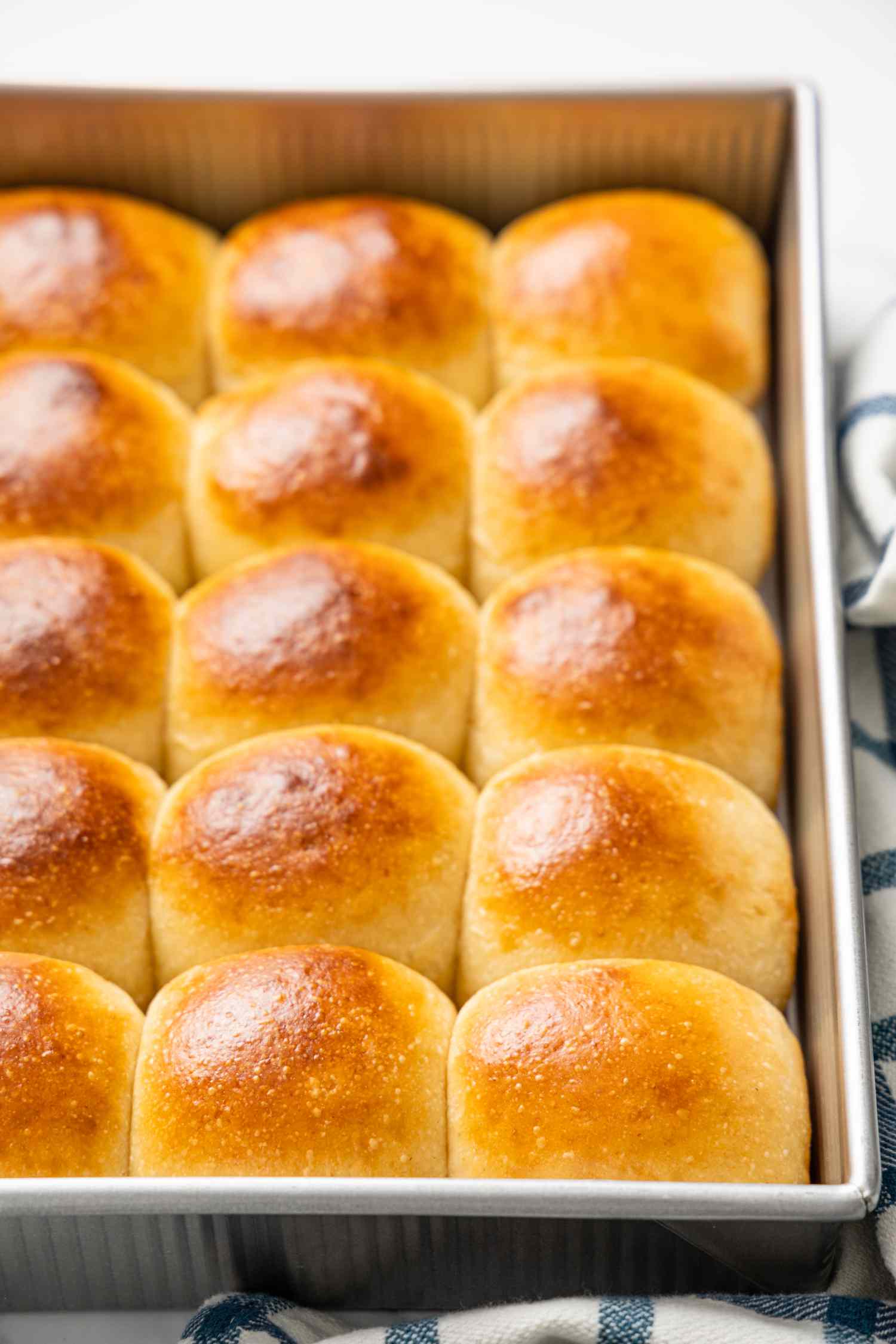
An in depth analysis of what qualifies as mezonos bread
BY RABBI YECHIEL TEICHMAN
A friend of mine who recently returned from a trip told me that he faced a quandary when he received his kosher meal on the airplane. The card accompanying the meal stated that the bracha for the bread roll was mezonos. But my friend recalled learning that when one sits down to a meal, one should make the bracha of hamotzi, making the mezonos roll moniker somewhat of a misnomer. I asked my friend what he did, and he said that he wasn’t sure what to do, so he just went hungry! The discussion below is intended to clarify the issue so that no Jews have to go hungry in this way again.
The Shulchan Aruch¹ teaches that there are three types of bread that are called Pas Kisnin (one of the interpretations is pocket or filled bread) upon which one recites borei minei mezonos rather than hamotzi. We will discuss the first category of pas kisnin that is mezonos since it is made with fruit juice rather than with water. The Mechaber is of the opinion that any amount of fruit juice mixed into the dough that affects the taste will make the bread mezonos. The Rema says that the majority of the liquid content must be fruit juice and be very noticeable in taste to qualify for mezonos. Ashkenazim follow the Rema while those of Sephardic descent follow the Mechaber. Bread that is made without any water is mezonos according to all opinions even if the taste of the juice is not very noticeable.²
Even assuming that the proper recipe was followed to allow the bread to be mezonos, if one eats at least four beitzim (200-230 grams),³ one must wash; recite hamotzi, and birkas hamazon.⁴ If one eats a lesser amount of bread but accompanies the bread with other foods, this is subject to dispute. The Magen Avraham is of the opinion that the other foods combine with the bread, and if together they equal four beitzim one must recite hamotzi. The Shulchan Aruch Harav proves that it is not considered a bread meal unless one consumes the requisite amount of bread without the accompanying food.⁵ Rav Shlomo Miller said that the proof that the latter opinion brings is compelling, and therefore unless one eats four beitzim of pas kisnin one should recite mezonos.
How does one determine whether the fruit juice is definitely noticeable in the bread? Is it enough that one tastes the sweetness, or must the actual flavour be discernible? Since this is a matter that is not clear, at COR certified bakeries the practice is that mezonos bread and rolls are made using 100% fruit juice. This ensures that they qualify as mezonos, even if one cannot clearly notice the flavour of the fruit juice.
A number of years ago, we explored the possibility of using raisin juice to produce mezonos rolls. Since it is questionable whether or not the taste of juice is detectable in contemporary mezonos rolls, we wanted to know if raisin juice could be used. Raisin juice is made by boiling 1 part chopped raisins with 5 parts water until the water absorbs the taste of the raisins. We wanted to know if raisin juice qualifies as 100% mei peiros (fruit juice). Rav Shlomo Miller was consulted and he said that raisin wine is essentially yayin mazug (diluted wine).
What then is the halachic status of yayin mazug? Is it seen as wine (and it may be used) or as a mixture of wine and water (and may not)? Rav Miller said that although Tshuras Shai (168) maintains that the water portion of diluted wine is not viewed as wine in order to complete the shiur for beracha acharonah, this is not the accepted position. For it is evident from the Gemara that people normally diluted wine yet the shiur for kos shel bracha did not change to accommodate the added water. Clearly, water used for meziga takes on the din of the wine.
The Dirshu Mishna Berura b’shem Rav Shlomo Zalman Auerbach⁶ presents the following question: if one dilutes wine so that there is three parts water to one part wine (1:3) then it makes sense to include the water in the calculation of the shiur revi’is because the water improves the wine. If however, one adds more than that amount of water to the wine, although the bracha on the drink is still hagefen (until the water is diluted with a ratio of 1:6), since the water does not improve the taste of the wine, why should that additional water count toward the shiur revi’is? Rav Shlomo Zalman answered that because the person who added more water enjoys wine which is more diluted, the water, in fact, does improve the wine and is therefore incorporated into the shiur (providing the shem yayin, the wine’s status, is maintained – i.e. the dilution ratio is less than 1:6). Accordingly, since raisin wine is an inherently weaker wine, all parts of such wine, including the water that cooked together with the raisins, count towards the shiur revi’is. Rav Miller paskened that this is grounds to consider raisin wine as 100% mei peiros for mezonos rolls.
Rav Shlomo Miller was asked the following: we find in hilchos Pesach⁷ that if one bakes matzah using raisin juice it is considered to be a mixture of juice and water, and is memaher lehachmitz, (will become chametz in less than 18 minutes) and may not be used. Only if the raisin juice was allowed to ferment before being mixed with flour is the wine – both raisin and water – considered to be wine, for the fermentation turns the water into wine. Minchas Yitzchok⁸ quotes Shu”t Chesed L’avraham (16) who uses a similar criterion for mezonos rolls as the criterion used for matzah and only allows the use of fermented raisin wine. Can we continue to use unfermented raisin juice, in mezonos rolls, and consider it as 100% mei peiros? Rav Miller said that it is a good question: but he did not rescind his p’sak. He felt that matzah is an exception. The halacha of memaher l’hachmitz is a question of the practical reality that is unique to hilchos matzah, since the mei peiros heats the dough and the water causes the chimutz, (fermentation) and should not be used to determine the status of mezonos rolls. Rav Miller shared another application of this thinking that the water content of diluted wine is considered wine.
Many wonder why on leil seder the bracha achrona we make after the fourth cup covers the third cup as well. We know that after the shiur ichul passes, (the requisite time for the food or drink to be digested) one may no longer recite a beracha acharonah.⁹ We also know that the shiur ichul for drinks is generally pretty short.¹⁰ So how can the bracha that is recited on the fourth cup cover the bracha requirement on the third cup? Rav Miller explained that we find in hilchos erev Pesach¹¹ that from the beginning of the tenth hour (three hours before night) one should not drink a cup of wine (as the Gemara¹² writes that a small amount of wine satisfies) as he will be satisfied and will not eat matzo with an appetite. We can infer from this that after drinking a single cup of wine, one remains satisfied for three hours. Clearly, the shiur ichul of a cup of wine is at least three hours, and therefore the bracha after the fourth cup can cover the bracha on the third cup as well – for the shiur ichul has not been reached. The Mishna Berurah¹³ states that less than a revi’is or rov revi’is of wine will not satisfy a person. Since, as mentioned above, the normal way of drinking wine was through dilution, and drinking one revi’is of diluted wine will satisfy, clearly the water added through dilution takes on the character of wine.
To answer my friend’s original question: is mezonos bread a misnomer? If it was made properly to qualify as mezonos, and was not consumed in an amount equal to the volume of four eggs, the proper bracha is in fact mezonos. ∎
Rabbi Teichman is a Rabbinic Administrator and Halachic Advisor at COR
Kashruth Council of Canada | www.cor.ca — 2022 / 5783, Halachic Corner, pp. 8–9
COR, the Kashruth Council of Canada, is one of the world’s largest kosher certification agencies, certifying thousands of products, restaurants, and facilities. Learn more at cor.ca, or read about our certification services at corkosher.com.