
THE “SHAIMOS PROBLEM”
By: Rabbi Yosef Dovid Rothbart
Rabbinic Administrator of the Halacha Institute of Toronto
Over the last several decades, much of the world has undergone a transformation. Businesses, governments, and institutions have increasingly moved toward becoming “paperless,” encouraging people to print less and rely more heavily on digital material. Yet this transition has not affected the Jewish community in quite the same way. If anything, we are producing an extraordinary amount of printed Torah material. New seforim and new editions appear constantly, often not because the material was previously unavailable, but because a new commentary, format, or feature has been added. At the same time, Torah sheets, source sheets, newsletters, and photocopied material are routinely printed for short-term use.
The result is that seforim that were once widely used are increasingly set aside in favour of newer editions, while loose pages and printed Torah material accumulate at an enormous rate. What happens to all of it when it is no longer wanted or needed? In short, we have a shaimos problem. The Toronto Jewish community is no exception.
The Halacha Institute Approach
To address the growing need for a year-round shaimos drop-off, the Halacha Institute developed an approach that took into account the practical challenges involved, including proper respect for shaimos, storage, burial, and ensuring that only material that actually requires genizah is ultimately buried. Rather than following the more conventional model of simply collecting shaimos for eventual burial, our approach places a strong emphasis on sorting the material that is dropped off.
The premise is simple: too often, papers and books that are not actually shaimos become mixed together with material that requires genizah. In addition, a sefer that one person no longer wants may be exactly the sefer someone else would otherwise purchase. By carefully sorting the material, recycling what does not require genizah, and setting aside usable seforim, the amount that ultimately requires burial can be significantly reduced. This lowers the amount of storage required and, ultimately, the amount of land needed for burial.
The premise proved correct.
What We Found
We have found many items mixed into shaimos that clearly did not belong there, including expired passports, lawyers’ letters, and even a dash cam that somehow found its way into a shaimos box. One of the more memorable finds was a tzedakah box full of money. We were ultimately able to return the pushka and its contents to the organization to which it belonged.
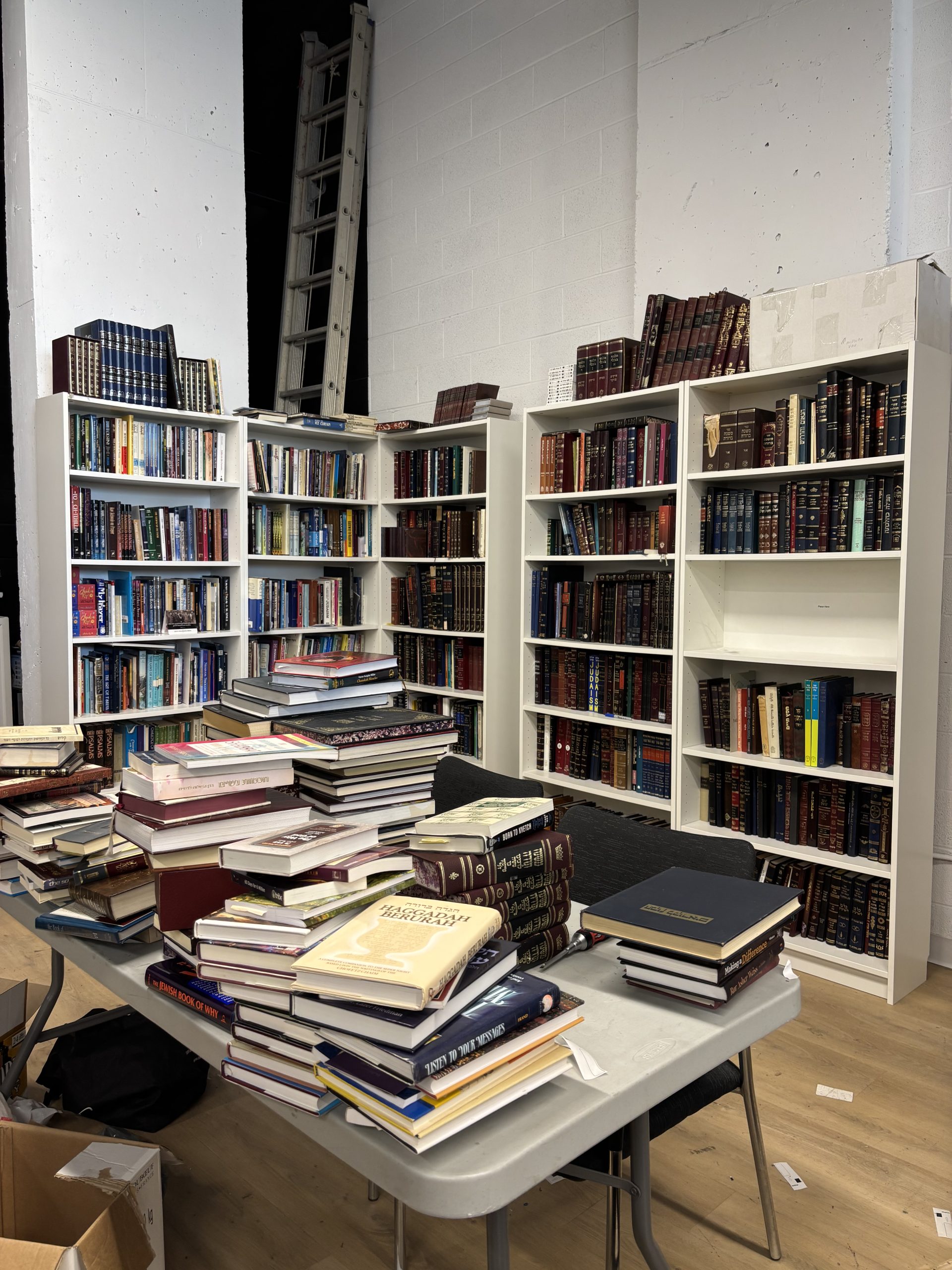
At the same time, we have found hundreds of seforim that were still in excellent condition, including English seforim, leather-bound volumes, complete sets, and even a Haggadah dating back to 1760. In fact, we have enough usable seforim to fill more than thirteen bookcases, with some volumes still in their original plastic. These seforim are made available for others to purchase at a reduced price rather than being buried unnecessarily. As of this writing, more than 150 seforim have already found new homes.
The Grey Area
The sorting process has also brought with it a number of interesting practical shaylos. Not every item that is dropped off fits obviously into the category of either “shaimos” or “not shaimos,” and some objects require closer halachic consideration. The following are a few of the questions that have come up through our work.
Double Yud
A written Name of Hashem may not be erased and, when no longer being used, must be properly stored away or buried.¹ At the same time, not every word, abbreviation, or symbol that refers to Hashem must be treated as an actual Name of Hashem. This distinction is important when determining what does and does not require shaimos.
For example, one may write ד׳, השם, or הקב״ה as references to Hashem. Although each of these clearly refers to Hashem, they do not have the kedushah of an actual Name and may be discarded.²
In many siddurim, a double yud (י־י) is used to represent the Name of Hashem. An older form of the symbol consisted of two yuds together with an additional mark, giving it the numerical value of twenty-six, corresponding to the numerical value of Hashem’s Name.³ Although י־י represents Hashem’s Name, it does not itself have the same status of an actual Name. It should not be erased except in pressing circumstances,⁴ and while it does not need to be properly stored away or buried, it should not be thrown in the garbage in a disrespectful manner.⁵
Name of Hashem in English
A name of Hashem written in another language (e.g. “G-d” in English) may be erased as it is does not have same kedushah as one of the Names of Hashem.⁶ However, it may not be said in an unclean place or uttered for no purpose as doing so would be disrespectful.⁷ Accordingly, one may not dispose of such a Name in a disrespectful manner.⁸
Mitzvah Items
Another area where we saw a lack of clarity was regarding the proper treatment of objects used for a mitzvah. The fact that an object was purchased for, designated for, or even used for a mitzvah does not necessarily mean that it has kedushah or requires burial. Rather, there are different categories of mitzvah articles, including mitzvah items, tashmishei mitzvah, and tashmishei d’tashmishei mitzvah, and the proper treatment of an item depends on which category it falls into.
A mitzvah item is an item that has been used for a mitzvah and is still fit and intended to continue being used for that mitzvah, such as a kosher tallis.⁹ This does not include an object that was merely designated for a mitzvah but was never actually used. For example, if someone purchases arba minim and then decides not to use them for Sukkos, they may be thrown in the garbage. Once an object has actually been used for a mitzvah, however, it should continue to be used for that mitzvah as long as it remains relevant and fit for use.¹⁰
A tashmish mitzvah is an object that was used in the performance of a mitzvah but is no longer being used for that mitzvah, either because the item is no longer fit for the mitzvah, such as torn tzitzis strings, or because the time for the mitzvah has passed, such as a lulav after Sukkos.¹¹ A tashmish mitzvah does not have inherent kedushah and may therefore be used afterward for an ordinary purpose, provided that the use is not demeaning.¹²
The Rema¹³ writes that such items should not be treated disrespectfully. Accordingly, a tashmish mitzvah should not simply be thrown into the garbage. Technically, however, it may be left in a place where it is unlikely to be trampled or otherwise treated disrespectfully. Some, however, have the practice of burying such objects, thereby demonstrating a special respect for mitzvos. The Rema writes that one who follows to this practice will merit bracha.
There is also a still lower category known as a tashmish d’tashmish mitzvah. This is an item that was designated for a use that brings it in contact with the mitzvah itself and it served an accessory to something used for a mitzvah. This category includes Shabbos candlesticks. Such an item has no kedushah and does not require genizah or burial. If it is not recognizable as a mitzvah accessory, it may even be placed in the garbage. If its connection to a mitzvah is obvious, however, it should preferably not be discarded in a degrading manner and may instead be wrapped before being thrown away.¹⁴
These distinctions help explain the treatment of a number of familiar household mitzvah items that we found among the shaimos that had been dropped off.
BESAMIM. Besamim used for Havdalah may be thrown in the garbage. However, when the besamim were designated exclusively for Havdalah, according to some Poskim, it is appropriate not to throw them away disrespectfully. Instead, they should be set aside until the dry out and then and burned. This is a praiseworthy practice, but not a strict halachic requirement.¹⁵
CHANUKAH MENORAH AND SHABBOS CANDLESTICKS. The menorah and Shabbos candle sticks are a tashmish mitzvah. They do not have inherent kedushah, but because they are readily recognizable as objects used for a mitzvah, they should not be thrown into the garbage in a degrading manner. The glass cups, however, may be thrown out, unless they are clearly recognizable as mitzvah accessories, in which case they should not be discarded disrespectfully.¹⁶
A KIDDUSH CUP. A kiddush cup likewise has no inherent kedushah. It does not require shaimos or burial. Nevertheless, because a kiddush cup is clearly recognizable as a mitzvah object, it should not be discarded disrespectfully. If pesukim or other sacred text are engraved on the cup, the writing creates a separate shaimos concern and must be treated accordingly.¹⁷
PICTURES OF GEDOLIM. Pictures of Gedolim present a different type of question. A photograph or picture of a rav or tzaddik does not have kedushah merely because of the person depicted, and it may therefore be discarded. However, some people are careful to place such pictures in shaimos. If a pasuk is printed on the picture, however, the presence of the pasuk requires the item to be treated in accordance with the halachos of shaimos.¹⁸
YARMULKE. A yarmulke may be thrown in the garbage and does not require genizah.¹⁹
Conclusion
I recently saw an article based on a story which traces the life cycle of a siddur, from the time it is new and treasured, through years of use, wear, and changing hands, until eventually it reaches the point where it can no longer be used and is brought to burial.
I was inspired by the story because it brought out that a sefer is more than just a book. It is an object of kedushah, one that can accompany a person through years of tefillah, learning, and growth. It reminded me what our goal was when we stepped up to address the “shaimos problem.”
Our goal was not merely to collect old seforim. It was to look at each one and determine whether there was still life left in it. If there was, we wanted to find it a new home where it could continue to help another person learn and grow. And if there was no longer life left in the sefer, then our responsibility was to ensure that it was brought to genizah and burial with the full kavod due to a sefer that had once been used for Torah and tefillah.
In that sense, shaimos is not simply about disposal; it is about completing the life cycle of an object of kedushah properly. As long as a sefer can still be used, its proper place is in the hands of someone who can learn or daven from it. When that is no longer possible, its proper place is in genizah. Our mission at the Halacha Institute is to make sure that each item is treated according to its true halachic status, with clarity, with care, and with the proper kavod ha-kedushah.
1. עי’ ביו”ד (סי’ רע”ו סעי’ ט’ וי’) איזה שמות נכלל בזה ואם אינם נמחקים טעונים גניזה, וכן מבואר בספר גנזי הקודש (פ”ז).
2. ועי’ בערה”ש (סי’ רע”ו סכ”ח), ועי’ בספר גנזי הקודש (שם) שהביא עוד דוגמאות וכת’ שהסכים הגריש”א זצ”ל.
3. תרומת הדשן (פסקים וכתבים סי’ קע”א) וז”ל, ואשר שאלת אם מותר למחוק הנכתבים בסדורים ותפילות הנרשמים בשני יודין וי”ו על גביהן? נראה הטעם דנכתבין הכי היינו משום דעולים מניינם כ”ו כשם המיוחד, עיי”ש.
4. שו”ע (יו”ד סי’ רע”ו סעי’ י’) והשם שכותבין בסדורין ב’ יודין ואחד על גביהן, מותר למחקו אם הוא לצורך, ועי’ ש”ך (שם) וז”ל, אם היה לצורך. ומפסקי מהרא”י איתא לצורך גדול וכך הובא בד”מ.
5. עי’ אגר”מ (יו”ד ח”ב סי’ קל”ח) ועי’ בספר גנזי הקודש (פ”ז הער’ כ”ב) שמביא עוד פוסקים שפסקו כן.
6. ש”ך (יו”ד סי’ קע”ט ס”ק י”א) וז”ל, אבל השם בל’ הקדש הוא שם אבל בלשון חול אינו שם כלל והגע עצמך דהא מותר למחות שם […] ורוסי”א וכיוצא בזה.
7. משנ”ב (סי’ פ”ה ס”ק י’) וז”ל, אסור לאמור שם אפילו בלשון לע”ז כגון ג-ט בלשון אשכנז או ב-גא בלשון פולין ורוסיא וכה”ג שאף ששם זה אין בו קדושה באותיות כתיבתו ומותר למוחקו מ”מ יש בו משום בזיון בהזכרתו במקום טינופת.
8. עי’ בספר גנזי הקודש (פ”ז אות י”ב עם הערות).
9. פרי מגדים (או”ח משבצ”ז סי’ קנ”ג ס”ק ט”ו) ועי’ סי’ כ”א עם משנ”ב (ס”ק ב’).
10. עי’ מגילה (כ”ו ע”ב) וע”ע מש”כ בשו”ע (או”ח סי’ כ”א סעי’ א’) עם משנ”ב.
11. משנ”ב (שם).
12. שם.
13. שם.
14. בספר גנזי הקודש (פט”ז) מהגריש”א זצ”ל והגרח”ק זצ”ל ומביא פוסקים שמקילין טפי.
15. בא”ח (שנה שניה פרשת ויצא סעי’ י’) וז”ל, וכתוב בספר תורה לשמה, ההדס של שבת לא יזרקנו אחר מוצאי שבת שיהיה עם הזבל לאשפה, אלא יצניענו עד שיתייבש ויניחנו בהסקת התנור של לחמי שבת. ועי’ בספר גנזי הקודש (פ”כ הער’ ח’) שזהו הנהגה טובה ולא דין.
16. שם פי”ט אות י”ג וי”ד.
17. שם פ”כ אות ו’.
18. שם אות ז’ מהגרח”ק זצ”ל וראיתי על אתר
שאלה זו: In general, publications that contain pictures of the Rebbe — Halachicaly it’s not necessary, however many Chassidim are careful to place in Shaimos.
19. שם אות ח’ ונכתב בהער’ שם, כששאלתי דבר זה להגאון רב ניסן קרליץ, הוא תמה על שאלתי ואמר שאין שום צד שנצריך גניזה.
UNDER THE LEADERSHIP OF THE RABBONIM OF HALACHIC INSTITUTE OF TORONTO
Rabbi Yacov Felder, Chairman
[email protected]
416.535.8008
www.halachainstitute.com