
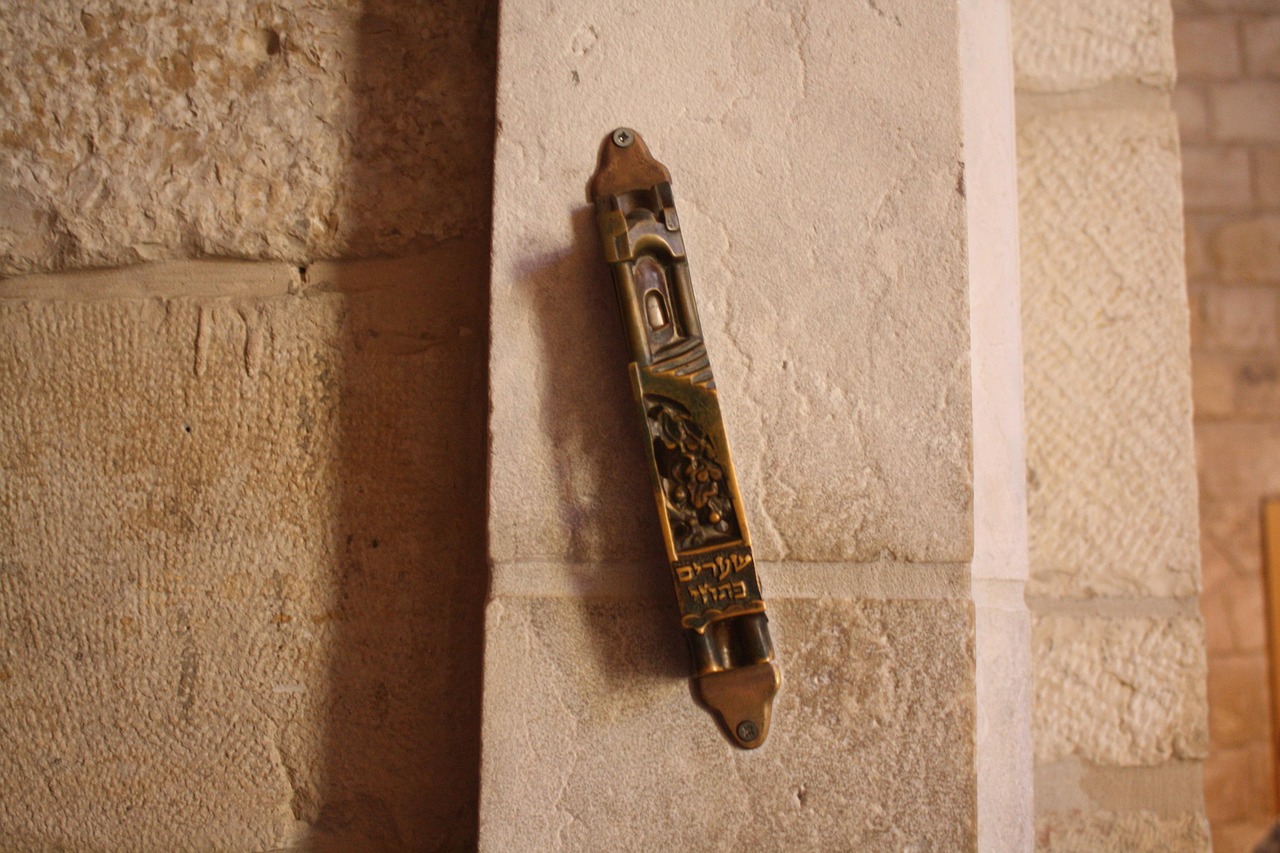
The Protective Power of the Mezuzah
BY: RABBI ASSAF AVRAHAM SWISSA
In each of the first two paragraphs of the Shema, the Torah mentions the mitzvah of affixing a mezuzah in the doorway of one’s home.¹ The Gemara (Menachot 32b) derives from the word בשעריך that the mezuzah needs to be mounted within the threshold of the doorway, between both doorposts and underneath the lintel. The Gemara also infers from the word בשעריך that one must attach the mezuzah securely to the door post.
The Rambam² writes: “A person should be very careful with the mitzvah of mezuzah because it is a constant obligation. In addition, each time a person goes in and out [of his house] he will encounter the name of Hashem and will be reminded of His love towards us. This will awaken him from his slumber and [save him] from the folly of pursuing that which is transient.”³
The right post
The Gemara (Menachot 34a) learns from the word ביתך – דרך ביאתך – the way you enter, that the mezuzah must be placed on the post to one’s right when entering into the doorway. Because most people begin walking by raising their right foot,⁴ therefore, the mezuzah is placed on the right doorpost. If someone placed the mezuzah on the left doorpost, he has not fulfilled the mitzvah.⁵
But sometimes it is not clear which is the right doorpost. For example, when a door is situated between two rooms, which room is the doorway serving as an entrance, and which one is functioning as an exit? Determining this will impact on which side the mezuzah should be installed.
To decide, the following questions, listed in order of priority, must be answered:⁶
- Do both rooms’ functions require affixing a mezuzah?
- Is one room an inner room?
- Which way does one enter more frequently?
- Which one is the primary room?
- Where are the hinges of the door located?
Backyards
A common scenario one may encounter is when a doorway opens to a backyard (or balcony) that does not lead out to the street (image #1). In such a case, although the Chazon Ish writes⁷ that the mezuzah should be to one’s right when entering the house from the backyard, the overwhelming majority of poskim disagree. They maintain that the mezuzah should be placed to one’s right when going out to the backyard. Since the only way to access the backyard is through the house, it is treated as an inner room of the house.⁸
When the backyard has access to the street (image #2), many poskim rule that the mezuzah should be placed to one’s right when entering the house from the backyard.⁹ They explain that the yard is secondary to the house in its usage, and the doorway to the house is seen more as an entrance to the house and less as an exit to the backyard. However, other poskim disagree.¹⁰ The prevalent custom follows the first opinion.¹¹
Double doors
When the right door of a double entryway is kept locked and rarely used but is opened when needed (e.g. to accommodate large gatherings), it is considered a door according to all poskim. Therefore, the mezuzah should be placed on the right doorpost. However, if the right door is only opened to provide space for large deliveries, poskim disagree as to whether one should still affix the mezuzah on the right doorpost,¹² or on the right door instead, as it serves as a doorpost (image #3 illustrates the second opinion).¹³ Rabbanim rule like the first opinion.¹⁴
Left-handed sliding door
Let’s look at a case of a left-handed sliding door. Such a door has the sliding door-panel on the left side when viewed from the exterior, and a stationary panel on the right.
Many halachic authorities hold that one is obligated to place the mezuzah on the right doorpost when entering the house (spot A in image #4).¹⁵
However, since only the left side of the doorway is entered through, some poskim write that the mezuzah should be put on the end of the fixed right panel (spot B in image #4), as the panel is considered an extension of the wall.¹⁶ Rabbanim rule like the first opinion.¹⁷
Purchasing and checking the mezuzah
One should invest in buying a mezuzah which is beautifully written (mehudar), from a sofer who one knows is ירא שמים and is proficient in all the laws relating to סת”ם (sefer torah, tefillin, and mezuzah).¹⁸
The mezuzah should be checked every 3.5 years.¹⁹ If a mezuzah is located in a humid area, it must be checked more frequently (i.e. once a year) since humidity can easily ruin a mezuzah.²⁰ It is a minhag chasidut to check one’s mezuzot every year in the month of Elul.²¹
Entering and leaving a house
The Rama (285:2) writes to place one’s hand on the mezuzah when entering and leaving the house. The Chida²² quotes from the Arizal to touch the name שקי on the mezuzah and kiss that hand. The Rama adds that one should say the following tefilla: ה׳ ישמור צאתי ובואי מעתה ועד עולם. The Ben Ish Chai²³ brings a longer nusach: ה׳ ישמור צאתי ובואי לחיים טובים ולשלום מעתה ועד עולם. קל שקי יברך אותי ויתן לי רחמים.
The outermost tefach
The Gemara (Menachot 33b) tells us that the mezuzah should preferably be placed on the outermost tefach of the doorpost.²⁴ This serves a dual purpose:
- First, people will immediately see the mezuzah and remember the oneness of Hashem.
- Second, the entire house – from the outer tefach inward – will be protected from spiritual and physical harm.²⁵
The Gemara teaches that a king of flesh and blood remains inside while his servants stand outside and protect him. In contrast, we sleep in our beds and הקדוש ברוך הוא watches over us from outside. Furthermore, even when we leave the house we are protected because of the mezuzah.²⁶
May the merit of this great mitzvah offer protection for the entire Jewish people.
RABBI SWISSA
Rabbinic Field Administrator
Kashruth Council of Canada | www.cor.ca — 2024-5785 Halachic Corner, pp. 6–7
COR, the Kashruth Council of Canada, is one of the world’s largest kosher certification agencies, certifying thousands of products, restaurants, and facilities. Learn more at cor.ca, or read about our certification services at corkosher.com.
Footnotes (checked against the images where legible; proof against the InDesign source)
- פרשת ואתחנן (דברים ו’, ט’) ובפרשת עקב (שם י”א, כ’).
- רמב”ם הל’ מזוזה (פ”ו הי”ג) וז”ל: חייב אדם להזהר במזוזה מפני שהיא חובת הכל תמיד. וכל זמן שיכנס ויצא יפגע ביחוד השם שמו של הקדוש ברוך הוא ויזכר אהבתו ויעור משנתו ושגיותיו בהבלי הזמן. וידע שאין דבר העומד לעולם ולעולמי עולמים אלא ידיעת צור העולם. ומיד הוא חוזר לדעתו והולך בדרכי מישרים. אמרו חכמים הראשונים כל מי שיש לו תפלין בראשו ובזרועו וציצית בבגדו ומזוזה בפתחו מוחזק הוא שלא יחטא שהרי יש לו מזכירין רבים והן הם המלאכים שמצילין אותו מלחטא שנאמר (תהילים לד ח) “חנה מלאך ה’ סביב ליראיו ויחלצם”.
- כן מלוקט בספר הלכות מזוזה לר’ יצחק שורבה שליט”א, עמוד ח’.
- גמ’ יומא (י”א:) דרך ביאתך וכי עקר איניש כרעיה דימינא עקר ברישא. ורמ”א (רפ”ט, ב’) כתב דאין חילוק בין אם הוא איטר יד או לא.
- שו”ע (שם) ואם קבעה משמאל פסולה.
- חובת הדר (פ”ח ח”א ה”ד).
- חזו”א (סי’ קס”ח אות ה’), בית מאיר (רפ”ט ס”ב).
- ט”ז סק”ד, וכמהרי”ל. וכ”כ באגרות משה יו”ד סי’ קפ”א, חובת הדר (פ”ח ח”א סק”ו), יביע אומר (ח”ד סי’ כ”ג אות ו’), אור לציון (ח”א יו”ד סי”ד), ילקו”י (הל’ מזוזה סעי’ כ”ו), שכל טוב (רפ”ט אות ק”ז). וכיון שהדבר שנוי במחלוקת, יקבע בלא ברכה, דספק ברכות להקל. ואם היה החצר מקורה ויש בו ד’ אמות על ד’ אמות אז יקבע בברכה בימין הנכנס לחצר לכו”ע. כ”כ באול”צ (שם) וכ”כ במשפט המזוזה (פי”ז ה”ט).
- והטעם דבית עם חצר הרי הבית תמיד עיקר כלפי החצר וממילא חיובן מחמת טפילות להבית, והדלת הוי כניסה לבית. אגרות משה (ח”א יו”ד סי’ קפ”א), אור לציון (ח”א יו”ד סוף סי’ י”ד), מזוזות ביתך להגרח”ק (רפ”ט סקט”ז), ילקו”י (הל’ מזוזה סעי’ כ”ו), חלקת בנימין (רפ”ט ס”ק מ”ח), משפט המזוזה (פ”ז ה”ב).
- פתחי מזוזות (רפ”ט סק”ל) דאם עפ”י רוב נכנסים לבית בפתח אחר, אז הפתח שבין החצר לבית נידון כיציאה לחצר וקובע את המזוזה בימין יציאתו לחצר מהבית. וכ”כ בשכל טוב (רפ”ט סוף אות ק”ז).
- שאלתי את הרב שלום יעקב פעלדער שליט”א היאך נוהגין והשיב שנוהגין לקבוע בימין הכניסה לתוך הבית.
- אגור באהליך (פכ”ב ה”ט), וכ”כ בשכל טוב (רפ”ט אות רס”ט).
- חובת הדר (פ”ח ח”ג ה”ג הע’ ח’ – י’). ועיי’ בחוט השני (רפ”ט סק”ו שעה”צ מ”ח*) שכתב שאם נתקעה וא”א לפותחה וביטלה, ודאי צריך לקבוע על הדלת ולא על המזוזה, ובזה מיקרי ג”כ פרץ פצימיו.
- שאלתי את הרב דוד פאם שליט”א והשיב לקבוע על המזוזה הקבועה, ולא על הדלת. וכן השיב הרב אהרן מילר שליט”א בשם אביו הגרש”א מילר שליט”א.
- שכל טוב (רפ”ט אות קכ”ט) שאין על הדלת הקבועה תורת מזוזה, ומה שמקום עמידת הדלת מצמצם את חלל הפתח אין זה מבטל שם מזוזה ממזוזת הפתח.
- חובת הדר (שם). וע”ע בספר ביתך ובשעריך (סי’ ו’) שמחלוקת החובת הדר והחולקים בדלת הזזה תלויה בחקירה בהלכות מזוזה, שלחובת הדר דין חיוב מזוזה הוא דין בגברא, ולהחולקים ס”ל מזוזה הוא דין בבית. ע”ש.
- כנ”ל בציון 14.
- ספר הלכות מזוזה לר’ יצחק שורבה שליט”א, עמ’ ח’, מגן אברהם (ל”ט סקי”ג).
- יומא י”א.
- ערוה”ש (רצ”א, א).
- מטה אפרים או”ח סי’ תקפא.
- בן איש חי (שנה ב’ פר’ כי תבא ה”ג).
- ברכי יוסף סי’ רפ”ה אות ב הביא שכתב האר”י ז”ל שיניח אצבעו הנקרא אמה על שקי וינשקנו ויתפלל לה’ שישמרנו בשם שקי וחילופי אותיות המאוחדות ת – כ – ה שיצילנו מיצה”ר.
- שו”ע (רפ”ט ס”ב) איזהו מקום קביעתה בתוך חלל הפתח בטפח הסמוך לחוץ.
- בן יהוידע (שבת לב:) וז”ל: ונ”ל בס”ד לכן כתיב על מזוזות ביתך, תיבת מזוזות הם אותיות זוז מות, ר”ל זזו כל הבנים מן המות ע”י מצוה זו. מכאן דוגמא לשמירת הגוף. דוגמא לשמירת הנפש איכא בזוהר פרשת ואתחנן (דף רסג:) […]
- גמ’ מנחות (לג:). מהרש”א בחי’ אגדות […]